
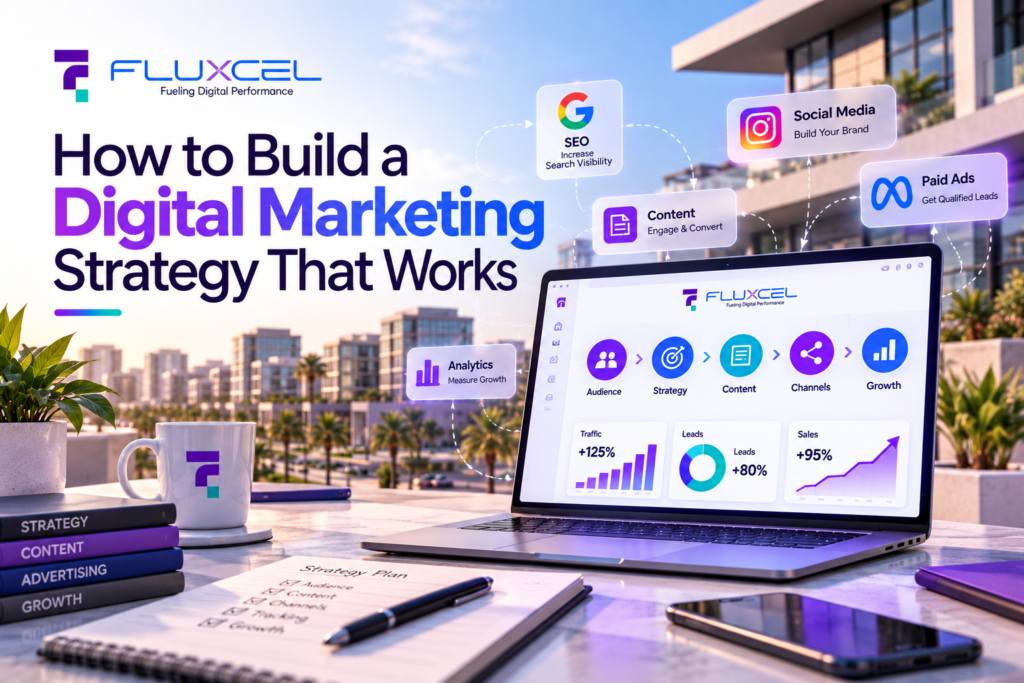
Digital marketing can become complicated very quickly.
You have Instagram, Facebook, TikTok, Google, SEO, email marketing, websites, content creation, paid advertising, influencers, and dozens of metrics competing for your attention.
The temptation is to try everything.
But successful digital marketing isn’t about using every available channel. It’s about understanding your business goals, knowing your customers, and choosing the right combination of channels to move those customers toward action.
For businesses in New Cairo, where customers have more choices and competition continues to grow across industries, having that direction matters.
Working with a Digital marketing agency New Cairo businesses trust can help turn scattered marketing activities into one connected strategy focused on measurable growth.
So, where should that strategy begin?
Start With the Business, Not the Platforms
One of the biggest mistakes businesses make is starting with questions like:
“Should we be on TikTok?”
“Should we run Google Ads?”
“How many Instagram posts should we publish?”
Those questions matter later.
The first question should be:
What does the business need marketing to achieve?
Maybe you need more qualified leads.
Maybe you want to increase e-commerce sales.
Perhaps you are launching a new business and need awareness.
Or maybe your company already generates plenty of leads, but the cost of acquiring each customer is becoming too high.
Each situation requires a different strategy.
Set Goals You Can Actually Measure
Instead of broad objectives such as “grow the brand,” define something you can track.
Your goals could include:
- Generate more qualified inquiries
- Increase website sales
- Reduce cost per acquisition
- Increase appointment bookings
- Grow revenue from existing customers
- Generate more showroom visits
- Increase organic search traffic
- Improve lead-to-customer conversion rates
Once you know the destination, you can decide which marketing activities can realistically help you get there.
Understand Who Your Customers Really Are
You cannot build an effective marketing strategy without understanding the person on the other side of the screen.
Basic demographic information is useful, but it isn’t enough.
Knowing that your customer is between 25 and 40 years old and lives in Cairo tells you very little about why they buy.
You need to go deeper.
Understand Their Problems and Motivations
Ask questions such as:
What problem are they trying to solve?
What makes them start searching for a solution?
What concerns could stop them from buying?
What information do they need before making a decision?
What alternatives are they considering?
What matters most when comparing businesses?
These insights influence your advertising, website, content, offers, and sales messaging.
A customer looking for the lowest price requires different communication from someone looking for convenience, expertise, quality, exclusivity, or long-term value.
Study the Customer Journey
Most customers don’t see one advertisement and immediately buy.
The journey is usually more complicated.
Someone might discover your business through an Instagram Reel today, visit your profile next week, search your company on Google later, browse your website, compare you with competitors, and finally contact you after seeing a retargeting advertisement.
Marketing needs to support that entire process.
A simple journey can be divided into:
Awareness → Consideration → Conversion → Retention
Awareness
Introduce your brand to relevant potential customers.
Social media, video content, display campaigns, influencer collaborations, and awareness advertising can contribute here.
Consideration
Help potential customers understand why your solution deserves attention.
Educational content, service pages, case studies, reviews, comparisons, and remarketing become important.
Conversion
Make taking action simple.
This might involve landing pages, offers, lead forms, WhatsApp, online checkout, appointment booking, or direct calls.
Retention
The relationship shouldn’t automatically end after the first purchase.
Email marketing, remarketing, loyalty initiatives, customer service, and useful content can encourage customers to return.
Choose Channels Based on Customer Intent
Not every business needs every platform.
A B2B company may find LinkedIn and Google Search particularly valuable.
A visually driven consumer brand might rely heavily on Instagram, TikTok, and Meta advertising.
A local clinic could benefit from Google Search, Maps, SEO, reviews, and social media.
An e-commerce company may combine Meta Ads, Google Shopping, email automation, SEO, and remarketing.
The right channel depends on where customers are and what they are doing there.
A Digital marketing agency New Cairo companies work with should recommend platforms because they support the strategy—not simply because those platforms are popular.
Build a Content Strategy Around Customer Needs
Content becomes much easier when you stop asking:
“What should we post today?”
Instead, ask:
“What does our customer need to see today?”
That shift changes everything.
Your content can serve several purposes.
Educate
Explain problems, solutions, products, services, or industry topics.
Build Trust
Use testimonials, case studies, reviews, behind-the-scenes content, expertise, and real examples.
Create Desire
Show customers the experience, transformation, benefit, or outcome your business provides.
Handle Objections
Answer the questions that might prevent customers from taking action.
Convert
Introduce products, services, offers, consultations, or another clear next step.
When these categories are balanced, your social media and website content begin supporting the sales process instead of simply filling a monthly calendar.
Connect Organic and Paid Marketing
Organic content and advertising shouldn’t operate in completely separate worlds.
Organic marketing helps businesses develop their voice, educate audiences, build credibility, and understand what types of content resonate.
Paid advertising can then amplify strong messages and reach targeted audiences at scale.
For example, if an educational Reel performs particularly well organically, that may indicate the topic resonates with customers.
The insight can influence future advertising creative.
Similarly, questions repeatedly appearing in advertising comments or lead conversations can inspire new organic content.
Each side should help improve the other.
Give Your Website a Clear Job
Your website shouldn’t simply exist because businesses are expected to have one.
It should contribute to the marketing strategy.
For a service business, that might mean generating inquiries.
For e-commerce, it means helping visitors confidently move from product discovery to purchase.
For B2B businesses, the website might need to explain complex services and encourage decision-makers to request a consultation.
Review Your Most Important Pages
Ask whether visitors can quickly understand:
- What your business does
- Who you help
- What makes you different
- What services or products you offer
- Why they should trust you
- What they should do next
If these answers aren’t obvious, increasing website traffic alone probably won’t solve the problem.
Create a Paid Advertising Strategy, Not Just Ads
Launching campaigns is easy.
Building profitable advertising is harder.
Effective paid media requires alignment between the audience, creative, message, offer, landing page, and conversion experience.
It also requires testing.
Rather than betting everything on one campaign, businesses can experiment with different:
- Hooks
- Headlines
- Videos
- Images
- Offers
- Audiences
- Landing pages
- Calls-to-action
Over time, the results provide valuable information about what customers respond to.
That information can improve much more than advertising. It can influence your overall marketing strategy.
Build Tracking Into the Strategy From Day One
You shouldn’t wait until the end of the month to ask whether marketing worked.
Tracking needs to be considered before campaigns launch.
Depending on the business, useful metrics might include:
- Website sessions
- Conversion rate
- Leads
- Qualified leads
- Cost per lead
- Customer acquisition cost
- Purchases
- Revenue
- Return on ad spend
- Repeat purchase rate
The objective isn’t to collect every possible metric.
It’s to monitor the numbers that help you make better decisions.
Review Performance as a Complete Funnel
Marketing channels shouldn’t always be evaluated independently.
Suppose Instagram introduces customers to your business, but those customers later search for your brand on Google and convert.
Looking only at the final click could underestimate Instagram’s contribution.
Likewise, a campaign generating cheap leads isn’t necessarily successful if those leads rarely become paying customers.
Look beyond individual platform dashboards and consider the complete customer journey.
This is one of the most important differences between running marketing activities and managing a marketing strategy.
Keep Improving the Strategy
No digital marketing strategy should remain unchanged forever.
Customer behavior changes.
Competitors introduce new offers.
Advertising costs fluctuate.
Platforms evolve.
New content formats emerge.
Your strategy should respond to what the data and your customers are telling you.
A useful cycle is:
- Plan based on business objectives.
- Execute across the right channels.
- Measure meaningful performance.
- Learn what is and isn’t working.
- Optimize based on those insights.
- Repeat with a stronger strategy.
This turns digital marketing into an ongoing growth process rather than a series of disconnected monthly campaigns.
Build Marketing Around Growth, Not Activity
Businesses don’t need more marketing activity simply for the sake of being active.
They need marketing that has direction.
That means starting with clear business objectives, understanding the customer, selecting channels intentionally, creating useful content, building effective conversion journeys, and measuring results that actually matter.
The right Digital marketing agency New Cairo businesses partner with should bring those elements together into one strategy rather than managing each service in isolation.
At Fluxcel, we build digital strategies around your business goals—not generic packages or one-size-fits-all plans.
From social media and paid advertising to SEO, content, websites, and performance marketing, every channel should have a reason for being part of your strategy.