
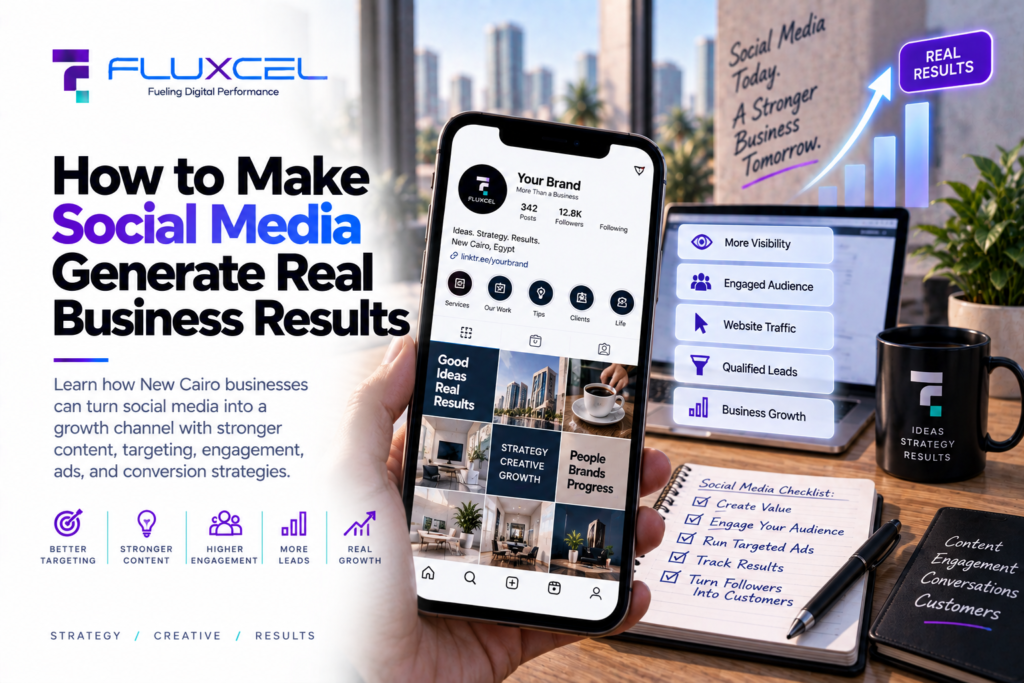
Almost every business is on social media.
They post designs. Share Reels. Run advertisements. Celebrate milestones. Follow trends. Promote offers.
But there’s a big difference between being active on social media and making social media work for your business.
A page can have thousands of followers and generate very few customers.
Another business might have a smaller audience but consistently generate website visits, WhatsApp conversations, qualified leads, and sales.
The difference usually isn’t how often they post.
It’s the strategy behind the content.
For businesses working with a Digtial marketing agency new cairo, social media shouldn’t exist simply to keep the page active. Every platform should have a clear role in building awareness, trust, demand, or conversions.
Here’s how businesses can turn social media activity into measurable growth.
Start With a Business Objective
Before deciding what to post, decide what you want social media to achieve.
Your objective might be:
- Increasing brand awareness
- Generating qualified leads
- Driving website traffic
- Increasing online sales
- Promoting a new product
- Getting more bookings
- Building a community
- Increasing repeat purchases
Different goals require different strategies.
If your objective is awareness, reach and video views may be important.
If you’re generating leads, you’ll care more about qualified inquiries and cost per acquisition.
If you’re selling online, revenue and conversion rates become much more important.
Without a clear objective, social media easily becomes a content production routine instead of a business tool.
Know Who You’re Creating Content For
One of the most common social media mistakes is creating content based entirely on what the company wants to say.
Customers don’t open Instagram wondering:
“What does this company want to tell me today?”
They’re thinking about their own interests, problems, goals, and entertainment.
Successful content finds the connection between what your business wants to communicate and what your audience actually wants to consume.
Understand Your Audience Beyond Demographics
Ask:
- What problems are they trying to solve?
- What questions do they regularly ask?
- What makes them hesitate before buying?
- What type of content gets their attention?
- What motivates them to take action?
- What language and tone feel natural to them?
A Digtial marketing agency new cairo strategy should use these insights to shape both content and advertising.
Stop Making Every Post an Advertisement
Imagine following a person who asks you to buy something every time they speak.
You’d probably stop listening.
Brands can create the same problem.
If every post says:
Buy Now.
Book Now.
Limited Offer.
Order Today.
audiences eventually tune out.
Your social media needs to provide value before constantly asking for value in return.
Build a Balanced Content Mix
A strong social media strategy usually includes several types of content.
Educational Content
Teach customers something useful.
Answer questions, explain industry concepts, share tips, or solve small problems.
Educational content can establish expertise while giving people a reason to save or share your posts.
Trust-Building Content
Show evidence that your business delivers what it promises.
This could include:
- Testimonials
- Reviews
- Case studies
- Previous projects
- Customer experiences
- Behind-the-scenes content
Trust is particularly important for businesses selling higher-value products or services.
Brand Content
Give your business a recognizable personality.
Show your culture, values, approach, team, or creative identity.
People should gradually understand what your brand represents.
Conversion Content
You still need to sell.
Promote services, products, launches, offers, appointments, or consultations.
The key is balance.
When customers already understand and trust the brand, conversion-focused posts become more effective.
Create Stronger Hooks
Social media moves quickly.
You often have only a moment to convince someone to stop scrolling.
That’s why the first part of your content matters.
Instead of opening with:
“We offer professional marketing solutions.”
try beginning with a customer problem:
“Getting clicks but not enough customers?”
Or a question:
“Are you paying too much for every new lead?”
Or an observation:
“More followers won’t fix a weak sales funnel.”
The hook earns attention.
The rest of the content earns the customer’s time.
Make Your Brand Recognizable
If customers saw one of your posts without the logo, would they know it came from your brand?
That’s a useful test.
Consistency helps customers recognize your content while scrolling.
Your visual identity can include:
- Brand colors
- Typography
- Graphic elements
- Photography style
- Video treatment
- Tone of voice
- Content formats
This doesn’t mean every design should look identical.
The goal is familiarity, not repetition.
Use Short-Form Video With a Purpose
Reels and short-form videos can generate significant reach, but simply creating videos isn’t a strategy.
Each video should have a purpose.
It might:
- Answer a question
- Demonstrate a product
- Explain a service
- Show a transformation
- Address an objection
- Tell a customer story
- Introduce an idea
- Entertain the audience
Capture Attention Early
Don’t spend the first five seconds introducing your logo.
Start with the interesting part.
Give viewers a reason to continue watching.
Then bring the brand naturally into the story.
Turn Engagement Into Conversation
Likes are useful signals, but conversations can be much more valuable.
Encourage meaningful interaction.
Ask relevant questions.
Respond to comments.
Answer DMs.
Use Stories to collect opinions.
Address common questions publicly.
Social media gives businesses something traditional advertising doesn’t always provide: two-way communication.
Use it.
Customer comments and questions can also reveal valuable ideas for future content.
Connect Organic Content With Paid Advertising
Organic and paid social media shouldn’t operate as completely separate strategies.
Your organic content can help reveal which ideas, hooks, formats, and messages resonate with audiences.
Strong concepts can then inspire advertising campaigns.
Paid media can also amplify your best content beyond your existing followers.
A Digtial marketing agency new cairo strategy can combine both sides:
Organic content builds presence and engagement.
Paid media expands distribution and accelerates results.
Together, they can create a much stronger system.
Don’t Send Every Customer to the Same Place
Someone who clicks a social media campaign should arrive somewhere relevant.
If the campaign promotes one specific service, don’t automatically send them to a generic homepage.
Create a journey around the campaign.
For example:
Social Ad → Service Landing Page → Proof → CTA → Lead Form
Or:
Instagram Reel → Product Page → Reviews → Checkout
The fewer unnecessary steps customers need to take, the better.
Retarget People Who Already Engaged
One of the most valuable aspects of social media advertising is the ability to reconnect with people who have already shown interest.
These could include:
- Video viewers
- Instagram engagers
- Website visitors
- Product viewers
- Previous leads
- Existing customers
These audiences already know something about your business.
So don’t introduce yourself again with the same message.
Move the conversation forward.
Show a testimonial.
Answer an objection.
Demonstrate the product.
Present an offer.
Give them a reason to take the next step.
Don’t Judge Performance by Likes Alone
A post receiving 5,000 likes may feel successful.
But what did those interactions contribute?
Depending on your objective, useful metrics could include:
- Reach
- Engagement rate
- Video watch time
- Profile visits
- Website clicks
- Leads
- Qualified leads
- Purchases
- Cost per acquisition
- Revenue
- Return on ad spend
Not every post needs to generate immediate sales.
Some content builds awareness or trust.
But your overall strategy should eventually connect social media activity to business outcomes.
Learn From What Your Audience Tells You
Your social media performance contains useful information.
Which topics get saved?
Which videos keep people watching?
Which posts generate comments?
Which advertisements produce qualified leads?
Which offers generate sales?
Use these insights to improve future content.
Don’t build your monthly content calendar entirely around assumptions.
Let real audience behavior influence what comes next.
Follow Trends Selectively
Not every trending audio, meme, or format is right for your business.
Before joining a trend, ask:
Can we connect this naturally to our brand or audience?
If yes, it may be worth using.
If the connection feels forced, skip it.
Being relevant doesn’t mean copying everything happening online.
Sometimes maintaining a distinctive brand identity is more valuable than chasing temporary reach.
Create a Clear Path From Content to Conversion
Customers shouldn’t reach the end of a strong piece of content and have no idea what to do next.
When appropriate, guide them.
The next step might be:
Visit the website.
Send us a message.
Read the full guide.
Book a consultation.
Shop the collection.
Request a quote.
Not every post needs an aggressive CTA.
But the overall customer journey should make it easy for interested people to move closer to your business.
Turn Social Media Into a Growth Channel
Social media isn’t successful because your business posts every day.
It’s successful when the right people notice your content, remember your brand, trust what you offer, and eventually take meaningful action.
That requires more than attractive designs.
It requires strategy, customer understanding, strong creative, consistent branding, paid distribution, conversion-focused journeys, and meaningful measurement.
For businesses choosing a Digtial marketing agency new cairo, social media should be connected to the larger marketing ecosystem — including advertising, SEO, websites, CRM, sales, and customer retention.
At Fluxcel, we build social media strategies around more than likes and followers. We connect content, creative, media, data, and conversion to help businesses turn attention into measurable growth.