
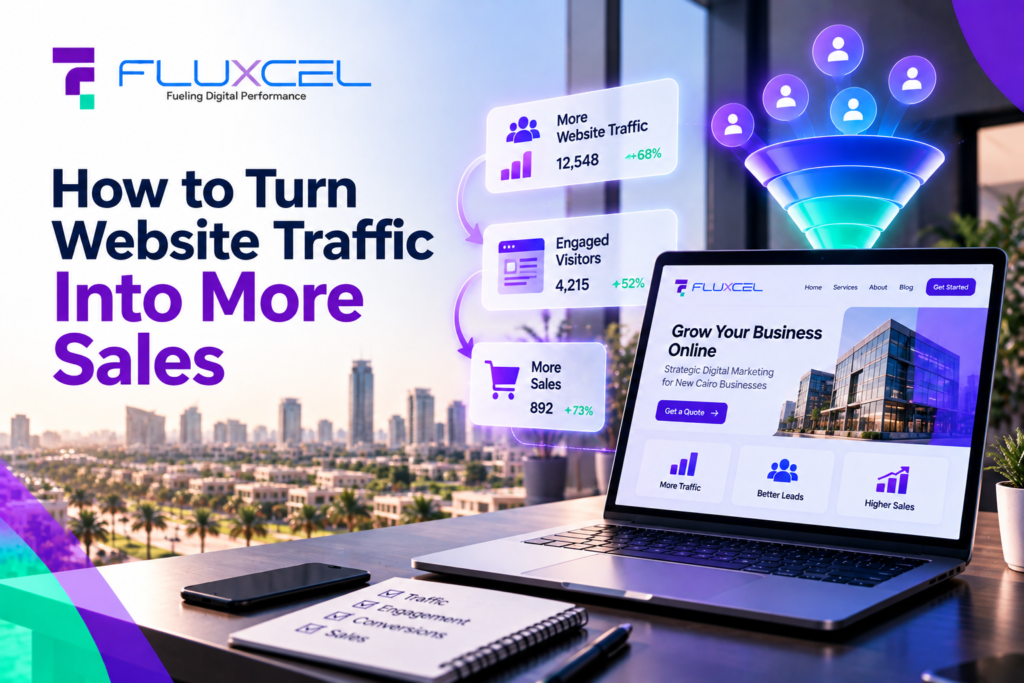
Getting people to visit your website is an achievement. But what happens when those visitors leave without making a purchase, requesting a quotation, or contacting your business?
For many companies in New Cairo, this is one of the biggest challenges in digital marketing.
They invest in Google Ads, social media campaigns, SEO, and website development. Traffic starts increasing, analytics reports look promising, and marketing teams celebrate growing visitor numbers.
Yet sales remain almost unchanged.
The problem isn’t necessarily a lack of traffic. It’s what happens after visitors arrive.
A successful digital marketing strategy should do more than bring people to a website. It should create an experience that encourages them to take meaningful action.
Working with a Digital marketing agency New Cairo businesses trust can help identify why visitors aren’t converting and what improvements could turn existing website traffic into measurable revenue.
Why Website Traffic Doesn’t Always Generate Sales
Website traffic and business growth are connected, but they’re not the same thing.
Imagine an online store receiving 10,000 visitors every month.
If only 1% of those visitors make a purchase, the business generates 100 orders.
Now imagine improving the conversion rate to 2% without increasing traffic.
At 1% conversion
100
Monthly ordersAt 2% conversion
200
Monthly ordersThe business has doubled its orders without spending more money to attract visitors.
This is the value of conversion rate optimization, commonly known as CRO.
Rather than focusing exclusively on increasing traffic, CRO examines how visitors interact with your website and identifies opportunities to improve their experience.
Understand What Your Website Visitors Want
Before changing website designs or launching new campaigns, businesses need to understand visitor behavior.
Not everyone arrives with the same expectations.
Someone clicking a Google Search advertisement may already be interested in purchasing a service.
A visitor arriving from an educational blog might simply be researching a topic.
Understanding these differences helps businesses create more relevant experiences.
Analyze Visitor Behavior
Tools such as Google Analytics 4 can help answer important questions:
Which pages attract the most visitors?
Which marketing channels generate valuable traffic?
Where do visitors leave the website?
Which pages contribute to conversions?
How do mobile and desktop visitors behave differently?
Businesses can also use privacy-conscious heatmap and session analysis tools to identify usability problems.
For example, visitors might repeatedly click an element that isn’t interactive or struggle to find important information.
These observations provide useful starting points for website improvements.
Make Your Website’s First Impression Count
Visitors form impressions quickly.
If your website looks confusing, outdated, or unrelated to what customers expected, they may leave before exploring your services.
Your homepage and landing pages should communicate your value clearly.
Create a Strong Above-the-Fold Experience
The first visible section of a webpage should answer three questions:
What does this business offer?
Why should I consider choosing it?
What should I do next?
For example, a company providing office spaces in New Cairo could use a headline such as:
Find Your Next Office in New Cairo’s Prime Business Locations
Below it, the company could explain its offering and include a clear button inviting visitors to explore available properties.
This communicates the purpose of the website immediately.
Avoid filling the first screen with vague statements, excessive animations, or competing calls to action.
Clarity often matters more than complexity.
Improve Landing Pages for Better Conversions
One common mistake is directing all advertising traffic to the homepage.
A homepage serves multiple purposes, but advertising campaigns usually promote specific products, services, or offers.
When someone clicks an advertisement, they expect to find information directly related to that message.
Match Your Landing Page to Your Advertisement
Imagine a dental clinic running Google Ads for teeth whitening.
If customers click the advertisement and land on a general homepage, they may need to search for the treatment themselves.
A dedicated teeth-whitening page could provide:
An explanation of the treatment.
Information about who may benefit.
Relevant treatment details.
Answers to common questions.
A clear appointment booking option.
This reduces unnecessary steps and makes the experience more relevant.
A professional Digital marketing agency New Cairo businesses work with should evaluate how advertising messages connect with landing pages, rather than treating campaign performance separately from website performance.
Build Trust Before Asking Customers to Buy
Customers rarely make purchasing decisions based only on attractive designs.
They also want reassurance that a business is credible and capable of delivering what it promises.
This is particularly important for expensive products, professional services, and purchases involving long-term commitments.
Add Trust Signals Where They Matter
Useful trust-building elements include:
Genuine customer reviews and testimonials.
Real examples of completed projects.
Clear business contact information.
Transparent policies and service descriptions.
Relevant professional certifications or credentials.
Secure payment options for e-commerce websites.
These elements should appear naturally throughout the customer journey.
For example, a real estate company could include actual property photographs, location details, and accurate availability information.
A marketing agency could showcase documented campaign results with appropriate context and client permission.
Trust grows when businesses provide specific, verifiable information instead of relying on exaggerated promises.
Make Calls to Action Clear and Relevant
A call to action, or CTA, tells visitors what to do next.
It might encourage someone to request a quotation, schedule a consultation, explore a product, or complete a purchase.
However, not every visitor is ready to take the same action.
Choose CTAs Based on Customer Intent
For service businesses, effective CTA examples might include:
Request a Free Consultation
Get a Customized Quote
Explore Our Services
Schedule an Appointment
For e-commerce websites, suitable options include:
Add to Cart
Shop the Collection
View Product Details
Complete Your Order
The wording should match what happens after the customer clicks.
Avoid misleading buttons or promises that the next step cannot fulfill.
Keep Important Actions Visible
Visitors shouldn’t have to scroll through several sections to find contact options.
On mobile devices, well-designed sticky buttons can sometimes make important actions easier to access.
However, these elements should not cover essential content or interrupt the browsing experience.
The goal is to make taking action convenient, not aggressive.
Reduce Friction in the Buying Process
Sometimes customers want to buy but encounter unnecessary obstacles.
Complicated forms, unexpected fees, confusing navigation, and slow-loading pages can all interrupt the purchasing journey.
For e-commerce businesses, checkout usability is particularly important.
Simplify the Conversion Process
Consider these improvements:
Reduce unnecessary form fields.
Clearly explain delivery charges and payment options.
Offer guest checkout when appropriate.
Display product availability accurately.
Provide helpful error messages.
Ensure payment methods work reliably.
Make forms and buttons easy to use on mobile devices.
Service businesses should also review their inquiry processes.
If someone wants to request a quotation, asking for excessive personal information before an initial conversation may discourage them.
Collect the information necessary for the next step and explain why it’s needed.
Use A/B Testing Instead of Guesswork
Businesses sometimes redesign entire websites because they believe a different layout will generate more sales.
But design preferences don’t always reflect customer behavior.
A/B testing provides a more structured way to evaluate changes.
How A/B Testing Works
An A/B test compares two versions of a webpage or element.
For example:
Version A uses a button labeled “Contact Us.”
Version B uses a button labeled “Request a Quote.”
Visitors are divided between the versions, and the business measures which performs better against a predefined goal.
Other testable elements include headlines, product page layouts, forms, images, and offer presentations.
Tests should run long enough to collect meaningful data, and businesses should avoid declaring a winner based on a handful of conversions.
For websites with limited traffic, usability research and customer feedback may be more practical than frequent A/B tests.
Connect Marketing Performance With Actual Revenue
One of the most important improvements businesses can make is connecting website analytics with real business outcomes.
Traffic reports alone rarely tell the full story.
A campaign may generate many visitors but relatively few sales.
Another campaign might attract fewer people who purchase more frequently or spend more per order.
Track the Right Conversion Metrics
Businesses should monitor:
Website conversion rate: The percentage of visitors completing a desired action.
Cost per acquisition: The advertising cost of acquiring a customer.
Average order value: The average amount spent per transaction.
Revenue by channel: Sales attributed to different marketing sources.
Cart abandonment: Shopping journeys that end before purchase.
Qualified inquiry rate: The proportion of inquiries that meet meaningful sales criteria.
Accurate measurement requires properly configured analytics and conversion tracking.
Businesses should also recognize that attribution isn’t always perfect, especially when customers interact with multiple channels before purchasing.
A more complete performance review combines digital analytics with sales and CRM information.
Continuous Optimization Creates Better Results
Conversion optimization isn’t a one-time project.
Customer expectations change, new competitors enter the market, and businesses introduce different products or services.
What works today may need adjustments several months later.
The most effective approach is continuous improvement.
Review performance, identify obstacles, prioritize changes, and measure results.
For example, if a product page receives substantial traffic but few add-to-cart actions, investigate the product presentation, pricing clarity, delivery information, and mobile usability.
If customers add products to their carts but rarely complete checkout, examine the payment and checkout experience.
Solving the right problem is more valuable than making random website changes.
Turn Your Existing Traffic Into Business Growth
Getting more website visitors can be valuable, but increasing traffic shouldn’t always be the first priority.
Sometimes the greatest opportunity is improving what happens after visitors arrive.
A faster website, clearer messaging, stronger landing pages, and simpler conversion process can help businesses get more value from their existing marketing investments.
For companies operating in competitive markets like New Cairo, these improvements can support stronger sales performance without depending entirely on larger advertising budgets.
At Fluxcel, we believe digital marketing should connect visibility with measurable business outcomes.
From paid advertising and SEO to website performance and conversion optimization, our approach focuses on helping businesses create more effective digital customer journeys.
As a Digital marketing agency New Cairo businesses can partner with, Fluxcel helps brands identify opportunities to improve their digital performance and turn marketing activity into meaningful growth.
Getting website visitors but not enough sales?
Connect with Fluxcel Digital Marketing Agency and discover how a smarter conversion strategy can help you get more value from your website traffic.