
One of the easiest ways to waste a marketing budget is trying to be everywhere.
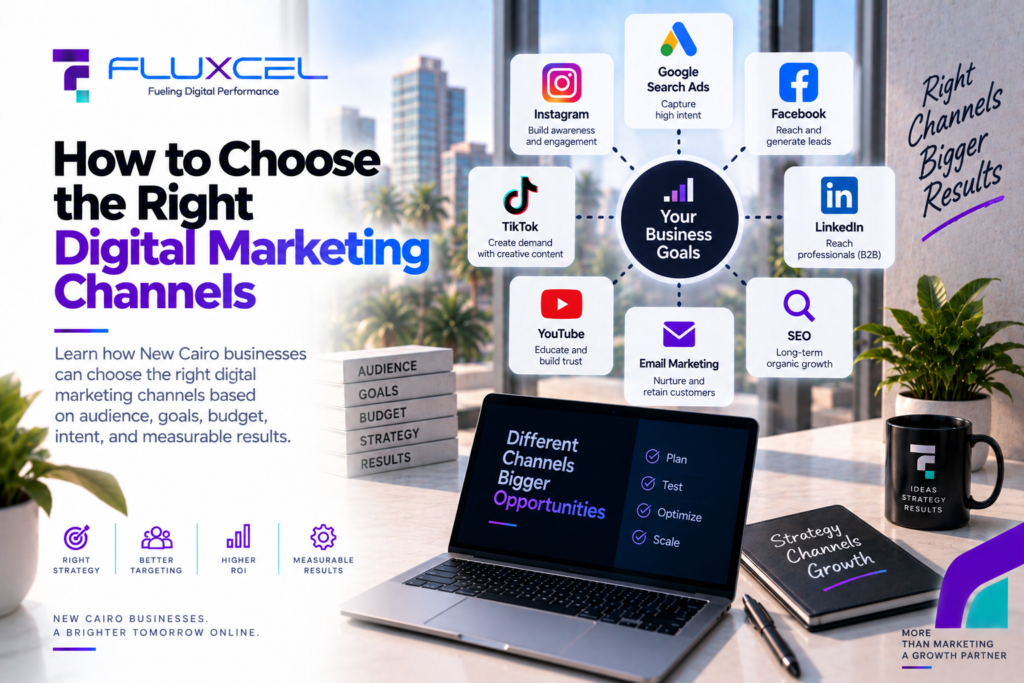
Google Ads. Instagram. Facebook. TikTok. LinkedIn. YouTube. SEO. Email marketing. Influencers.
Every platform offers opportunities, and every few months, another channel seems to become the “next big thing.”
That can leave businesses asking a difficult question:
Where should we actually invest our marketing budget?
The answer isn’t the platform with the most users or the one currently generating the most buzz.
The right marketing channels are the ones that connect your business with the right customers at the right stage of their journey.
For businesses searching for a Digtial marketing agency new cairo, choosing the right channel mix should start with business goals, customer behavior, and data — not trends.
Here’s how to make that decision.
Start With Your Business Goal
Before choosing a platform, decide what you’re trying to achieve.
Different marketing channels are naturally better suited to different objectives.
Your goal might be:
- Building brand awareness
- Generating qualified leads
- Increasing e-commerce sales
- Driving showroom visits
- Booking appointments
- Reaching business decision-makers
- Increasing website traffic
- Retaining existing customers
A business trying to generate immediate leads may prioritize different channels from a new brand trying to build awareness.
The channel should follow the objective.
Not the other way around.
Understand Where Your Customers Spend Their Time
You don’t need your business to be everywhere.
You need it to be where your customers are.
For example, a B2B company trying to reach senior decision-makers might find LinkedIn more relevant than TikTok.
A fashion or lifestyle brand may find Instagram and TikTok much more important.
A local service business may benefit significantly from Google Search because customers actively search when they need the service.
Look at Real Customer Behavior
Don’t rely entirely on assumptions.
Review:
- Website traffic sources
- Customer surveys
- Sales conversations
- Social media insights
- Search behavior
- Previous campaign results
- Lead sources
- Conversion data
Ask existing customers how they discovered you.
The answers may challenge your assumptions.
Use Google When Customers Are Already Searching
Google is powerful because it can capture existing demand.
Someone searching:
“Digital marketing agency New Cairo”
isn’t simply browsing content.
They’re potentially looking for a service provider.
That level of intent can make Google particularly valuable for businesses offering products or services people actively search for.
Google Search Ads
Search campaigns can place your business in front of people searching relevant keywords.
They can work particularly well for:
- Professional services
- Healthcare
- Local businesses
- B2B services
- High-intent products
- Urgent customer needs
The challenge is choosing the right keywords and matching them with relevant landing pages.
Use SEO to Build Long-Term Search Visibility
Google Ads can generate traffic quickly.
SEO takes more time, but it can create sustainable visibility.
Instead of paying for every click, your website can appear organically for relevant searches.
SEO can include:
- Service page optimization
- Blog content
- Local SEO
- Technical SEO
- Internal linking
- Website improvements
- Search-intent optimization
A Digtial marketing agency new cairo strategy can combine SEO and paid search rather than treating them as competing channels.
Google Ads can capture immediate opportunities while SEO builds longer-term visibility.
Use Meta to Create and Capture Interest
Facebook and Instagram aren’t only places where customers search for products.
They’re discovery platforms.
Someone may open Instagram with no intention of buying anything and discover a product that immediately interests them.
That’s why Meta can be especially effective for businesses with strong visual offers or clear customer problems.
Meta Can Support Different Funnel Stages
You can use it for:
Awareness — introducing the brand.
Engagement — encouraging people to interact with content.
Traffic — sending audiences to your website.
Lead generation — collecting inquiries.
Sales — promoting products.
Retargeting — reconnecting with interested audiences.
The creative usually plays a major role in performance.
Strong targeting can’t compensate indefinitely for content people don’t care about.
Use TikTok When Creativity Matches the Audience
TikTok can create significant reach, particularly when content feels native to the platform.
But simply reposting corporate advertisements may not produce the same effect.
Successful TikTok content often feels faster, more human, and less polished than traditional advertising.
Businesses can experiment with:
- Short educational videos
- Demonstrations
- Trends
- Behind-the-scenes content
- Customer problems
- Product showcases
- Storytelling
The key question isn’t:
“Is TikTok popular?”
It’s:
“Can our brand create content that our target audience would genuinely want to watch there?”
Use LinkedIn for B2B Marketing
For companies targeting other businesses, LinkedIn can be a valuable channel.
It allows brands to communicate with professionals based on factors such as industry, role, company, and professional interests.
Businesses can use LinkedIn for:
- Thought leadership
- B2B advertising
- Lead generation
- Company updates
- Case studies
- Professional networking
- Recruitment
- Sales outreach
Content should generally provide professional value rather than simply copying posts from Instagram.
The audience context is different.
Your content should be too.
Don’t Underestimate Email Marketing
Social media algorithms change.
Advertising costs change.
Search rankings change.
Your customer database is an audience you can communicate with more directly.
Email marketing can support:
- Lead nurturing
- Customer retention
- Promotions
- Product launches
- Educational content
- Re-engagement
- Abandoned carts
- Upselling and cross-selling
Email becomes particularly valuable when your business already has website traffic, leads, or previous customers.
Instead of paying repeatedly to reach the same people, you can continue developing the relationship.
Use YouTube for Education and Longer Decisions
Some purchases require more explanation.
A customer may need to see how something works, understand a complicated service, compare alternatives, or develop confidence before contacting the business.
YouTube can support that journey.
Useful video topics might include:
- Tutorials
- Product demonstrations
- Customer stories
- Expert explanations
- Comparisons
- FAQs
- Case studies
Videos can also support your website, SEO, social media, and sales process.
One strong video can have value across multiple channels.
Don’t Divide Your Budget Equally
Businesses sometimes split their budget evenly because it feels safe.
25% Meta.
25% Google.
25% TikTok.
25% LinkedIn.
But customers don’t behave equally across platforms.
Your budget shouldn’t either.
Allocate Based on Opportunity
Consider:
- Customer intent
- Audience size
- Historical performance
- Conversion rates
- Customer acquisition cost
- Business margins
- Customer lifetime value
- Creative requirements
Start with the channels most closely connected to your business goals.
Then test additional opportunities strategically.
Understand the Role of Each Channel
Not every channel needs to generate the final conversion.
Imagine this journey:
Instagram → Blog → Google Search → Website → Retargeting Ad → Sale
Which channel deserves credit?
Several of them contributed.
Instagram created awareness.
The blog educated.
Google captured intent.
The website built confidence.
Retargeting encouraged the customer to return.
A Digtial marketing agency new cairo strategy should consider this wider journey rather than judging every channel only by last-click conversions.
Test New Channels Without Betting Everything
Trying new platforms is important.
But you don’t need to move half your marketing budget every time a new opportunity appears.
Create controlled tests.
Define:
- The audience
- The objective
- The budget
- The creative
- The KPI
- The testing period
Then evaluate the results.
If the channel shows potential, expand gradually.
If not, use what you learned and move on.
Testing should generate information, even when it doesn’t immediately generate profit.
Avoid Copying the Same Content Everywhere
Being on multiple platforms doesn’t mean uploading the exact same creative everywhere.
Each platform has its own behavior.
A detailed LinkedIn post may not work as an Instagram Reel.
A TikTok-style video may feel inappropriate for a B2B email.
A Google Search advertisement serves a completely different purpose from a YouTube video.
Keep your brand consistent, but adapt the execution to the platform.
Track Which Channels Generate Customers
Marketing decisions become easier when you connect channel performance to business results.
Don’t stop at:
Impressions → Clicks → Leads
Try to understand:
Channel → Lead → Qualified Lead → Customer → Revenue
You may discover that one platform generates cheap leads but few customers.
Another may generate fewer leads at a higher initial cost but significantly more sales.
That information should influence future budget allocation.
Build the Right Marketing Mix for Your Business
There is no universal “best” digital marketing channel.
Google may be essential for one business and secondary for another.
Instagram may drive significant sales for one brand while LinkedIn generates stronger opportunities for a B2B company.
SEO may become the foundation of long-term acquisition, while paid media provides immediate growth.
The strongest strategy usually comes from understanding how different channels work together.
Choosing a Digtial marketing agency new cairo businesses can work with should therefore involve more than asking which platforms the agency manages. The more important question is whether the channel strategy is built around your audience, objectives, customer journey, and measurable results.