
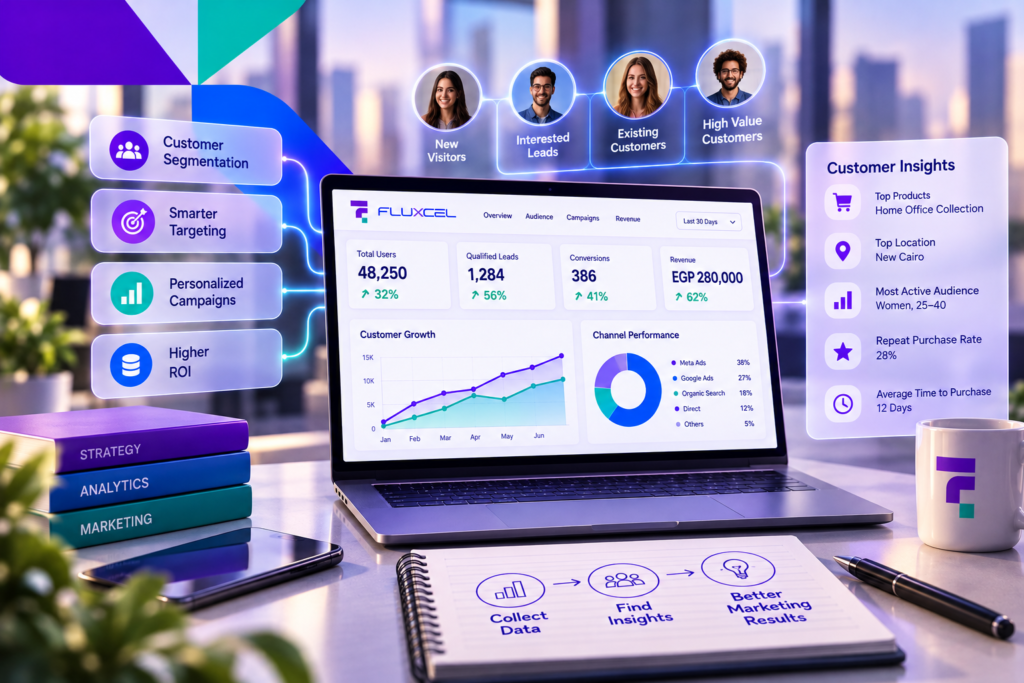
Every customer interaction tells you something about your business.
A visitor browsing your website, someone clicking an advertisement, a customer abandoning their shopping cart, or a person making a repeat purchase can all provide valuable information about how people engage with your brand.
But here’s the challenge: many businesses collect customer data without actually using it to improve their marketing.
They have Google Analytics reports, Meta Ads dashboards, website statistics, and customer databases. Yet their marketing decisions are still based on assumptions rather than meaningful insights.
The result? Campaigns targeting the wrong audiences, wasted advertising budgets, missed sales opportunities, and marketing strategies that struggle to deliver consistent growth.
For businesses operating in competitive markets like New Cairo, understanding customer behavior can create a significant advantage.
Working with a digital marketing agency New Cairo businesses can rely on helps transform scattered marketing information into practical decisions that improve campaign performance.
The goal isn’t to collect as much data as possible. It’s to understand which information matters and how to use it to make your marketing more effective.
1. Understand Why Customer Data Matters
Digital marketing becomes more effective when businesses understand who their customers are, what they need, and how they make purchasing decisions.
Without this information, marketing often becomes a guessing game.
You might create advertisements based on what you believe customers want, invest in platforms because competitors use them, or promote products without knowing which audiences are most interested.
Customer data helps replace those assumptions with evidence.
What Can Customer Data Tell You?
Depending on the information available, customer data can reveal:
Which marketing channels attract valuable customers.
What products or services generate the most interest.
Which audiences are more likely to purchase.
Where customers experience difficulties on your website.
How often existing customers return.
Which campaigns contribute to revenue.
For example, an e-commerce business might discover that customers who purchase a particular product frequently return to buy complementary items.
That insight could support more relevant product recommendations and retention campaigns.
Data becomes valuable when it helps you understand customer behavior and improve business decisions.
2. Identify the Customer Data You Actually Need
One of the biggest mistakes businesses make is trying to track everything.
While modern marketing platforms provide extensive reporting capabilities, not every metric deserves equal attention.
The right information depends on your business objectives.
First-Party Customer Data
First-party data is information your business collects directly through its interactions with customers, subject to applicable privacy requirements.
Examples include:
Purchase history.
Customer inquiries.
Website interactions.
Email subscriptions.
Product preferences.
Customer support conversations.
This information can help businesses understand existing customer relationships.
For example, a company offering premium office spaces might analyze which locations receive the most inquiries and which types of businesses are requesting viewings.
Marketing Performance Data
Advertising and analytics platforms provide information about campaign performance.
Useful metrics include impressions, clicks, conversions, cost per lead, and attributed revenue.
These measurements help businesses understand how their marketing activities perform.
However, platform data should be interpreted carefully because attribution models, tracking limitations, and reporting methods can produce different results.
Customer Feedback
Not every useful insight comes from a dashboard.
Sales conversations, reviews, surveys, and customer support questions can reveal concerns that numbers alone might not explain.
Combining customer feedback with quantitative information creates a more complete picture.
3. Use Customer Data to Build Better Audience Segments
Treating every customer the same can make marketing messages less relevant.
Different customers have different interests, budgets, needs, and purchasing behaviors.
Audience segmentation allows businesses to organize customers into meaningful groups and communicate more effectively.
Segment Customers Based on Behavior
Instead of relying exclusively on demographics, consider how customers interact with your business.
For example, an online fashion store might identify:
First-time website visitors.
Customers who recently purchased.
Shoppers interested in specific product categories.
Customers who haven’t purchased for several months.
Frequent buyers with higher average order values.
Each segment may respond to different messages.
A first-time visitor might need more information about the brand, while a returning customer may appreciate recommendations based on previous purchases.
Avoid Making Assumptions About Every Customer
Customer segments should be based on meaningful patterns rather than stereotypes.
Not everyone within the same age group or location has identical preferences.
Review actual behavior and update segments as new information becomes available.
The purpose of segmentation is to improve relevance, not to make unnecessary assumptions about individuals.
4. Discover Which Marketing Channels Bring Valuable Customers
A business might generate thousands of website visitors from social media while receiving most of its qualified inquiries through Google Search.
Without analyzing performance data, it could mistakenly invest more money in the channel generating the highest traffic volume.
Compare Channels Using Business Outcomes
Instead of evaluating channels only by clicks or impressions, examine what happens after visitors arrive.
Consider:
How many qualified inquiries does each channel generate?
Which channels contribute to purchases?
What is the cost of acquiring a customer?
Do customers from certain channels make repeat purchases?
How much revenue is associated with each channel?
Imagine two hypothetical campaigns:
Metric | Google Ads | Meta Ads |
|---|---|---|
Website visits | 2,000 | 5,000 |
Qualified leads | 100 | 75 |
Paying customers | 20 | 15 |
Advertising spend | EGP 20,000 | EGP 15,000 |
Cost per customer | EGP 1,000 | EGP 1,000 |
Although Meta Ads generates more traffic, both campaigns have the same customer acquisition cost based on advertising spend.
This illustrates why traffic volume alone isn’t enough to determine which platform deserves more investment.
Consider the Customer Journey
Customers don’t always purchase immediately after clicking an advertisement.
Someone might discover your business through Instagram, research your services through Google, and contact you several days later.
Because multiple channels can influence the same decision, avoid relying entirely on a single attribution report.
A digital marketing agency New Cairo companies work with can help evaluate channel performance using multiple data sources and realistic business objectives.
5. Personalize Marketing Without Becoming Intrusive
Personalization can make marketing more relevant when it reflects genuine customer interests.
However, effective personalization doesn’t require collecting excessive personal information.
Often, simple behavioral insights are enough.
Create Relevant Customer Experiences
Consider an online electronics store.
A customer who previously purchased a laptop might be interested in compatible accessories.
Another customer who browsed gaming products may prefer content about gaming equipment.
When customers have provided appropriate consent, these insights can support relevant recommendations and communications.
Keep Personalization Helpful
Avoid messages that reveal unnecessarily detailed knowledge about someone’s browsing behavior.
Instead, focus on offering useful information based on clear customer interests.
For example, a customer who subscribed to receive product updates might appreciate being informed about a new collection in a category they selected.
The goal is to improve the customer experience while respecting privacy and preferences.
6. Find Problems in Your Customer Journey
Sometimes, businesses attract relevant audiences but lose potential customers before they complete a purchase or inquiry.
Customer behavior data can help identify where these problems occur.
Analyze Important Website Actions
Tools such as Google Analytics 4 can help businesses understand how visitors interact with their websites when properly configured.
For an e-commerce store, important events might include:
Viewing a product.
Adding an item to the cart.
Beginning checkout.
Completing a purchase.
For a service business, relevant events might include viewing service pages, clicking contact buttons, submitting forms, or completing appointment bookings.
Identify Where Customers Leave
Imagine an online store where many visitors add products to their carts but relatively few complete checkout.
Possible explanations might include unexpected delivery costs, limited payment options, technical problems, or a complicated checkout process.
The data reveals where the issue occurs, but further investigation is needed to understand why.
Review the customer experience, test the checkout process, and consider collecting feedback before making major changes.
Improving these friction points can increase conversions without requiring additional advertising spend.
7. Use Data to Improve Advertising Creative
Creative quality has a major influence on digital advertising performance.
But choosing the right message or visual shouldn’t depend entirely on personal preference.
Campaign data can reveal which creative approaches resonate with different audiences.
Compare Different Advertising Messages
For example, a fitness supplement brand might test two approaches.
One advertisement focuses on product quality and ingredients.
Another highlights convenience and how the product fits into a customer’s training routine.
Both could be relevant, but their performance may differ depending on the audience.
Evaluate More Than Engagement
A creative generating a high click-through rate doesn’t necessarily produce the most sales.
Compare results using meaningful conversion metrics.
You may discover that one advertisement attracts more clicks while another generates fewer but more valuable customers.
Use these findings to improve future creative concepts rather than repeatedly producing similar advertisements without learning from their performance.
8. Build Smarter Customer Retention Campaigns
Acquiring new customers is important, but existing customers can also contribute significantly to business growth.
Customer data helps businesses understand purchasing patterns and identify appropriate opportunities to reconnect.
Understand Repeat Purchase Behavior
Analyze information such as:
Purchase frequency.
Average order value.
Product categories purchased.
Time between purchases.
Customer retention rates.
For example, a homewear brand might discover that some customers purchase new collections seasonally.
That insight could inform the timing of future campaigns.
Make Retention Messages Relevant
Instead of sending the same promotional message to everyone, consider customer preferences and previous interactions.
A returning customer might appreciate early information about a relevant product launch.
Someone who hasn’t purchased recently may benefit from a helpful update about new services.
Always respect communication preferences and provide appropriate options to unsubscribe from promotional messages.
Effective retention marketing should strengthen relationships rather than overwhelm customers.
9. Turn Marketing Reports Into Better Decisions
Many businesses receive detailed monthly reports filled with charts, percentages, and advertising metrics.
But a report is only useful when it helps someone make a decision.
Focus on Actionable Insights
Instead of reporting only that website traffic increased by 20%, explain what contributed to the increase and whether it generated valuable business outcomes.
For example:
“Organic traffic increased this month, particularly on service-related pages. However, inquiry volume remained stable, suggesting an opportunity to review calls to action and conversion performance.”
This observation gives the business a clear area to investigate.
Create a Consistent Reporting Process
A useful marketing report should answer:
What happened during the reporting period?
What factors may explain the results?
What should we improve next?
Separate confirmed findings from possible explanations.
For example, a decline in conversions might coincide with a website change, but that doesn’t automatically prove the change caused the decline.
Testing and further analysis may be necessary.
10. Build a Data-Driven Marketing Culture
Using customer data effectively requires more than installing analytics tools.
It involves making evidence-based decision-making part of everyday marketing operations.
Connect Marketing With Sales and Customer Service
Marketing teams often understand advertising performance, while sales teams know which inquiries become customers.
Customer service teams may understand recurring concerns or complaints.
Combining these perspectives helps businesses make more informed decisions.
For example, marketing data might show that a campaign generates inexpensive leads.
However, sales feedback may reveal that most inquiries are unrelated to the service being promoted.
That information should influence future targeting and campaign messaging.
Review and Improve Continuously
Set clear objectives, track relevant results, and regularly evaluate what needs to change.
Avoid making decisions based on isolated numbers or short-term fluctuations.
Look for meaningful trends, consider business context, and test improvements systematically.
A professional digital marketing agency New Cairo businesses partner with can help connect analytics, advertising performance, and customer insights into a coordinated optimization process.
The objective is to make data useful for everyday decisions, not simply produce more reports.
Turn Customer Insights Into Smarter Business Growth
Customer data can be one of your most valuable marketing resources, but collecting information alone doesn’t improve performance.
The real opportunity comes from understanding what the data reveals and using those insights to make better decisions.
By identifying valuable audiences, evaluating marketing channels, improving customer experiences, and strengthening retention strategies, businesses can develop more efficient marketing systems.
The most successful approach combines reliable data with practical business knowledge and an understanding of real customer needs.
At Fluxcel, we help businesses move beyond surface-level marketing metrics and focus on the information that supports meaningful growth.
From SEO and paid advertising to performance analysis and conversion optimization, our approach connects marketing data with strategic decisions.
As a digital marketing agency New Cairo businesses can work with, we focus on helping brands understand their audiences, improve campaign efficiency, and identify opportunities for sustainable growth.