
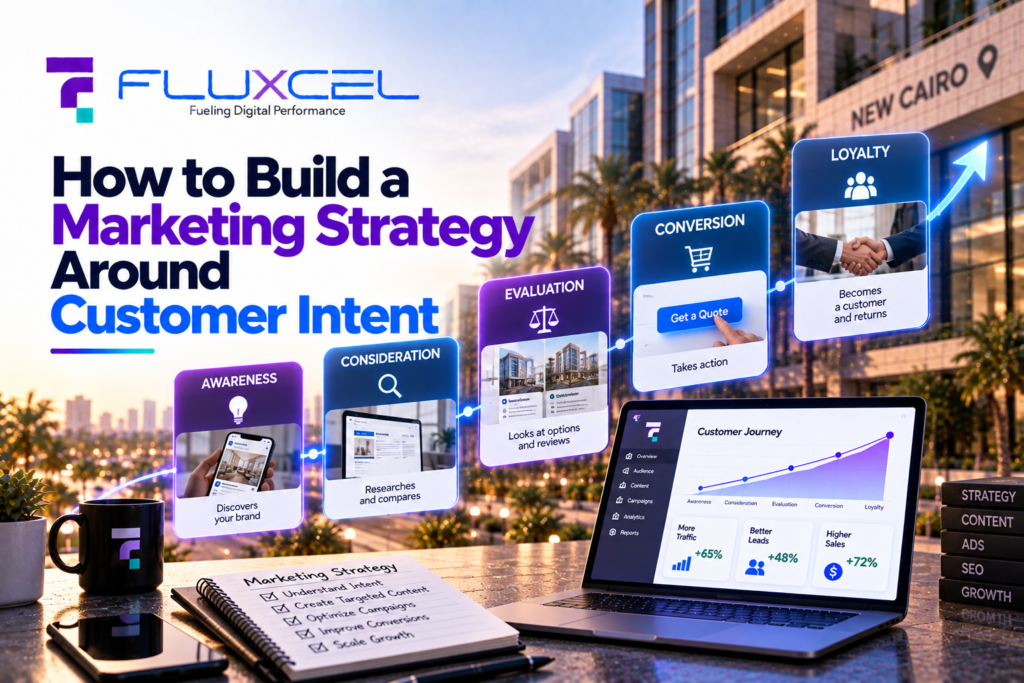
Brand awareness is often treated as the part of marketing that is difficult to measure.
Businesses run videos, publish social media content, sponsor campaigns, and generate millions of impressions—but eventually someone asks the most important question:
Is all this awareness actually helping the business grow?
It should.
Strong brand awareness is not simply about making more people recognize your logo. It is about making the right people remember your business for the right reasons.
When customers repeatedly see a brand, understand what it offers, trust its expertise, and remember it when they are ready to buy, awareness starts influencing leads, sales, customer acquisition, and long-term growth.
For businesses competing in New Cairo, where customers are constantly exposed to new companies, developments, restaurants, clinics, retailers, and service providers, becoming recognizable can create a significant advantage.
A Digital marketing agency New Cairo businesses work with should therefore connect brand awareness with the complete customer journey rather than treating it as an isolated marketing objective.
Brand Awareness Is More Than Reach
Reach tells you how many people potentially saw your content.
Brand awareness goes deeper.
Someone seeing one advertisement while scrolling quickly through Instagram does not necessarily mean they will remember the business tomorrow.
Effective awareness requires consistency.
Customers need to repeatedly associate your brand with a clear idea.
For example, you might want people to associate your company with:
- Premium quality
- Expertise
- Convenience
- Innovation
- Value
- Reliability
- Customer experience
The stronger this association becomes, the easier it is for your business to enter the customer’s consideration when a need appears.
Start With Clear Positioning
Before trying to make more people aware of your brand, determine exactly what you want them to remember.
If your positioning is unclear, more reach can simply expose more people to an unclear message.
Ask yourself:
Who do we serve?
What problem do we solve?
What makes us different?
Why should customers believe us?
What do we want to be known for?
Your answers should influence everything from your website copy and advertising messages to social content and visual identity.
Create a Consistent Brand Experience
Recognition grows through repetition.
Your audience should be able to encounter your business on Instagram, Google, your website, an advertisement, or an email and still recognize the same brand.
That does not mean every design needs to look identical.
It means the overall identity should feel connected.
Maintain Consistency Across
- Logo usage
- Brand colors
- Typography
- Photography
- Video style
- Tone of voice
- Messaging
- Offers
- Customer experience
Consistency helps create familiarity.
And familiarity can make customers feel more comfortable choosing a business they have encountered before.
Focus on Being Memorable, Not Just Visible
There is a difference between seeing an advertisement and remembering it.
Digital audiences consume enormous amounts of content every day.
Generic marketing quickly disappears into the feed.
Give Your Brand Distinctive Elements
This could include:
- A recognizable visual style
- A consistent message
- A distinctive content format
- A strong brand personality
- Memorable campaign concepts
- A recognizable tagline
The objective is to create something customers can associate specifically with your business.
If your marketing looks and sounds exactly like every competitor, increasing reach may not create meaningful recognition.
Build Content Around What Your Audience Cares About
Brands sometimes create content almost entirely around themselves.
“We launched this.”
“We offer that.”
“We are the best.”
But audiences are usually more interested in their own needs.
The strongest brand-awareness content often sits at the intersection between what your business knows and what your audience cares about.
Useful Content Categories Can Include
- Educational tips
- Industry insights
- Common mistakes
- Customer questions
- Behind-the-scenes stories
- Product demonstrations
- Customer experiences
- Trends
- Problem-solving content
This gives people a reason to follow and remember your business even when they are not ready to purchase immediately.
Use Video to Increase Familiarity
Short-form video has become an important awareness format because it allows brands to communicate quickly and visually.
But simply publishing Reels or TikToks does not automatically create awareness.
The content still needs a recognizable identity and clear purpose.
A business can use video to:
- Explain common customer problems
- Demonstrate products
- Introduce services
- Answer FAQs
- Show projects
- Share customer stories
- Explain processes
- Present expertise
Repeated exposure to useful content can gradually build familiarity with the brand.
Combine Organic Content With Paid Distribution
Organic social media is valuable, but businesses cannot always rely on algorithms to consistently reach their target audience.
Paid media can help distribute strong content to more of the right people.
Instead of thinking of paid advertising only as:
“Buy now.”
consider using it to amplify your strongest brand messages.
A useful awareness campaign might introduce the brand, communicate a customer problem, demonstrate expertise, or highlight an important differentiator.
The audience can then be moved into more conversion-focused campaigns later.
Build Awareness Among the Right People
A million impressions sound impressive.
But if most of those impressions come from people who are unlikely to ever become customers, the business value may be limited.
Awareness campaigns still require audience strategy.
For a New Cairo business, that might mean considering:
- Geographic targeting
- Customer demographics
- Interests
- Behaviors
- Industry
- Job roles
- Purchasing power
- Previous interactions
A Digital marketing agency New Cairo businesses partner with should focus on relevant awareness rather than simply chasing the largest possible reach.
Use Multiple Touchpoints
Customers rarely remember a brand because of one interaction.
They may first discover you through Instagram.
Later, they see a video advertisement.
A week later, they search for your service on Google.
Then they visit your website.
After that, they see a retargeting advertisement.
Eventually, they contact you.
Each interaction contributes to familiarity.
This is why brand-building strategies should consider the complete digital ecosystem rather than evaluating every channel independently.
Turn Awareness Into Consideration
Awareness should create a pathway toward deeper engagement.
Once someone knows your brand, give them opportunities to learn more.
You can introduce:
- Service explanations
- Product details
- Case studies
- Testimonials
- Comparisons
- FAQs
- Reviews
This helps move customers from:
“I’ve seen this company before.”
to:
“This company might be right for me.”
That transition is critical.
Recognition alone does not create revenue.
Recognition combined with relevance and trust can.
Retarget People Who Already Know Your Brand
Retargeting helps businesses capitalize on the awareness they have already paid to create.
Instead of continually introducing yourself to completely new audiences, reconnect with people who have:
- Watched your videos
- Engaged with your social accounts
- Visited your website
- Viewed products
- Read service pages
These people already have some familiarity with your business.
Your next message can therefore move beyond introduction.
You might show testimonials, product benefits, case studies, offers, or stronger calls-to-action.
Make Search Part of Your Brand Strategy
One sign of growing awareness is when people begin actively searching for your business.
They may search your company name, products, reviews, locations, or social profiles.
Your search presence should support that interest.
Make sure customers can easily find:
- Your website
- Google Business Profile
- Social media accounts
- Products or services
- Contact information
- Reviews
SEO is not only about ranking for generic keywords.
It also helps ensure that customers researching your brand find accurate and useful information.
Build Trust Alongside Recognition
Being famous does not automatically make a business trusted.
Awareness needs credibility.
Show customers why they should feel confident choosing you.
Trust-building assets can include:
- Customer reviews
- Case studies
- Testimonials
- Client logos
- Certifications
- Real projects
- Educational expertise
- Transparent information
The more expensive or important the purchasing decision, the more trust customers typically need.
Measure More Than Likes and Followers
Brand awareness is not always as straightforward to measure as online purchases, but businesses can still monitor meaningful indicators.
Useful metrics may include:
- Reach
- Video views
- Website traffic
- Direct traffic
- Social engagement
- Branded searches
- Returning website visitors
- Audience growth
- Retargeting audience size
But these should eventually connect with deeper business metrics.
Are more people searching for your brand?
Are returning visitors converting?
Are leads mentioning Instagram or your content?
Are campaigns producing more conversions as familiarity grows?
This helps connect awareness with commercial impact.
Don’t Expect Brand Building to Happen Overnight
Performance advertising can sometimes generate results quickly.
Brand building usually requires more patience.
Recognition develops through repeated exposure and consistent experiences.
A business that changes its identity, message, and direction every few weeks makes that process more difficult.
Strong brands repeat important ideas without becoming repetitive.
They reinforce their positioning from different creative angles.
Over time, customers begin to recognize the brand before they even read the name.
Build a Brand Customers Remember When It Matters
The purpose of brand awareness is not simply to become popular.
It is to become memorable and relevant when a customer is ready to make a decision.
That requires clear positioning, consistent identity, useful content, strategic distribution, multiple customer touchpoints, and strong trust signals.
When these elements work together, awareness becomes more than a marketing metric.
It creates demand.
It improves familiarity.
It supports conversion.
And it can make future customer acquisition easier.
At Fluxcel Digital Marketing Agency, we build brand and performance strategies together so businesses do not have to choose between being recognized and generating measurable results.