
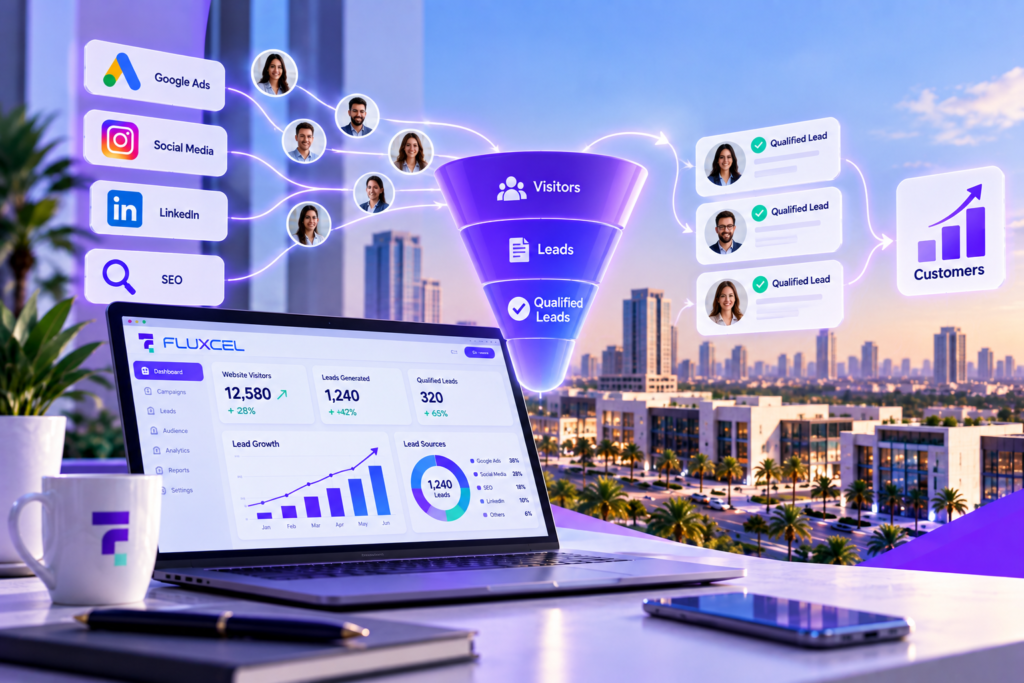
Generating leads sounds simple.
Launch an ad. Add a form. Wait for inquiries.
But anyone who has managed digital campaigns knows that more leads do not always mean more business.
A campaign might generate 200 inquiries while the sales team complains that most people are not serious, cannot afford the service, or do not understand what the company offers. Meanwhile, another campaign produces only 50 leads but results in significantly more customers.
The difference is lead quality.
For businesses searching for a Digital marketing agency New Cairo, this should be an important part of the conversation. Marketing should not be judged only by how cheaply it can generate contact details. It should attract people who have a genuine reason to become customers.
What Is a Qualified Lead?
A lead is simply someone who has shown interest in your business.
A qualified lead goes further.
They are someone whose needs, location, budget, timing, or other relevant factors make them a realistic potential customer.
What qualifies a lead depends entirely on the business.
For a real estate company, qualification might involve budget, preferred location, property type, and purchasing timeline.
For a B2B company, it might depend on company size, industry, job role, or business requirements.
For a clinic, it could be someone actively looking for a particular treatment within the area the clinic serves.
The objective is not to make it difficult for customers to contact you. It is to align marketing with the people most likely to benefit from what you offer.
Start With a Clear Ideal Customer Profile
If your targeting begins with “everyone who might be interested,” campaigns can quickly become inefficient.
Businesses should first define who represents a valuable customer.
Look at Your Existing Customers
Your current customer base can provide useful clues.
Ask:
- Which customers generate the most value?
- Which services or products do they purchase?
- Where did they originally discover the business?
- What problems were they trying to solve?
- How long did they take to make a decision?
- What questions did they ask before buying?
Patterns can help shape your future marketing.
The goal is not necessarily to find more leads. It is to find more people who resemble your best customers.
Stop Optimizing Only for Cheap Leads
Cost per lead is useful, but it can become misleading when viewed alone.
Imagine two campaigns.
Campaign A:
100 leads at EGP 100 each.
Campaign B:
50 leads at EGP 180 each.
Campaign A appears better if cost per lead is the only KPI.
But what if Campaign A produces five customers while Campaign B produces 15?
Suddenly, the more expensive lead source is creating considerably more business value.
This is why marketers need to look beyond platform-level numbers.
A Digital marketing agency New Cairo businesses work with should connect advertising performance with what happens after leads enter the sales process.
Use Messaging to Pre-Qualify Your Audience
Targeting is not the only way to improve lead quality.
Your message itself can act as a filter.
Clear advertising helps people understand what your company offers before they submit their information.
Suppose a business provides a premium service but its advertisements focus entirely on discounts.
Those campaigns may attract people whose primary concern is finding the lowest possible price.
That creates a mismatch.
Instead, the campaign could emphasize expertise, service quality, process, results, or another factor that reflects the brand’s actual positioning.
The people who respond may be fewer, but they could be much closer to the customer profile the business wants.
Build Offers Around Real Customer Needs
“Contact us today” is technically a call-to-action, but it does not always give customers a strong reason to respond.
An effective lead-generation campaign needs a clear offer.
That does not necessarily mean a discount.
An offer could be:
- A free consultation
- A quotation
- An assessment
- A product sample
- A demonstration
- A downloadable guide
- An appointment
- A trial
- A customized recommendation
The strongest offers solve a small but meaningful problem for the customer.
Instead of asking, “What can we give away?”, ask:
“What would help this person take the next step?”
Match the Offer to Customer Intent
Someone who has just discovered your brand may not be ready to schedule a sales call.
Someone searching Google for your exact service might be.
These customers should not necessarily receive the same offer.
Low-Intent Audiences
People discovering your brand through social media may respond better to educational or low-commitment content.
You might encourage them to:
- Read a guide
- Watch a video
- Explore a service
- Follow the brand
- Join an email list
High-Intent Audiences
People actively searching for a solution may be ready for stronger actions such as:
- Requesting a quote
- Booking an appointment
- Calling the company
- Scheduling a consultation
- Purchasing
Matching the CTA to intent can improve both conversion rate and lead quality.
Create Landing Pages That Continue the Conversation
Your advertisement makes a promise.
Your landing page needs to deliver on it.
If someone clicks an ad for a specific service and lands on a generic homepage, they may immediately feel disconnected from the message that attracted them.
A dedicated landing page should clearly explain:
- What the offer is
- Who it is designed for
- What problem it solves
- Why the business is credible
- What the visitor should do next
Keep unnecessary distractions to a minimum.
The page should feel like a natural continuation of the advertisement.
Ask the Right Questions on Lead Forms
Shorter forms can generate more submissions.
But more submissions are not always the objective.
Sometimes adding one or two useful qualification questions can help the sales team understand who they are speaking with.
For example, a form might ask for:
- Required service
- Preferred appointment date
- Project type
- Budget range
- Company size
- Preferred location
The questions should depend on the business.
Avoid turning a lead form into an interrogation. Every additional field creates friction.
Only ask for information that helps determine the next step.
Use Content to Generate Better Leads
Good content does more than increase reach.
It can educate potential customers before they ever speak to your sales team.
Imagine a prospect has already read an article explaining your process, watched a video about your service, seen customer testimonials, and explored a case study.
By the time that person submits an inquiry, they already understand much more about your business.
That can create a completely different sales conversation.
Useful Lead-Generation Content Includes
- How-to articles
- Buying guides
- FAQs
- Case studies
- Customer stories
- Service comparisons
- Educational videos
- Industry insights
Content can help move customers from curiosity to genuine consideration.
Retarget People Who Already Showed Interest
Not every potential customer converts during the first visit.
That does not mean the opportunity is lost.
Retargeting allows businesses to reach people who have already interacted with the brand.
That could include someone who:
- Visited a service page
- Viewed a product
- Watched a video
- Engaged with social media
- Started but did not complete a form
- Added a product to their cart
These audiences already have some familiarity with the business.
A second message can provide the reassurance or information they need to continue.
For example, instead of showing the same advertisement repeatedly, a retargeting campaign might feature a customer testimonial, case study, FAQ, or stronger offer.
Improve the Speed of Lead Follow-Up
A strong lead-generation campaign can still fail after the form is submitted.
Imagine someone requests a quotation from three companies.
The first responds within minutes.
The second responds later that afternoon.
The third replies two days later.
Even if the third company has excellent services, it has made the sales process unnecessarily difficult.
Businesses should establish clear procedures for handling new leads.
This may involve:
- Instant confirmation messages
- CRM notifications
- Automated emails
- WhatsApp integration
- Lead assignment
- Follow-up reminders
Marketing and sales should operate as one connected process.
Track Leads Beyond the Advertising Platform
Advertising platforms can tell you that a conversion happened.
They cannot always tell you whether that conversion became a valuable customer.
Businesses need a way to follow leads beyond the initial inquiry.
A basic lead journey might look like:
New Lead → Contacted → Qualified → Proposal → Customer
Tracking these stages reveals much more than cost per lead alone.
You may discover that one channel generates inexpensive inquiries but very few customers, while another generates fewer leads that convert much more frequently.
That information can completely change where you invest your marketing budget.
Measure the Metrics Closest to Revenue
Marketing teams and business owners should agree on what success actually means.
Useful metrics may include:
- Qualified leads
- Cost per qualified lead
- Lead-to-customer conversion rate
- Customer acquisition cost
- Sales generated
- Revenue by marketing source
- Return on advertising spend
This creates a clearer connection between marketing activity and business performance.
Instead of celebrating 500 leads, you can understand how many actually became customers.
Quality Creates Better Opportunities for Growth
Successful lead generation is not about filling a spreadsheet with names and phone numbers.
It is about creating genuine business opportunities.
That requires understanding your ideal customer, reaching them through the right channels, communicating a relevant offer, creating a strong landing experience, and connecting marketing with an effective follow-up process.
For businesses choosing a Digital marketing agency New Cairo, the focus should go beyond generating the lowest possible cost per lead.
The better question is:
Are we attracting the kind of customers we actually want to grow with?
At Fluxcel Digital Marketing Agency, we build lead-generation strategies around the complete journey—from targeting and creative to landing pages, tracking, optimization, and conversion.