
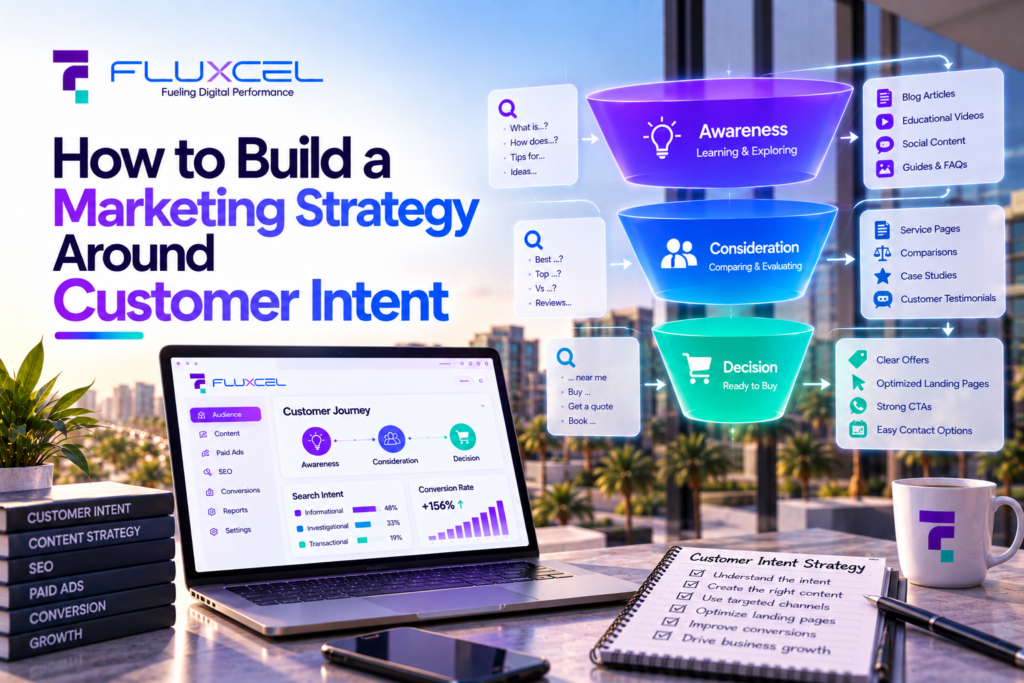
Not every person who sees your marketing is looking for the same thing.
One customer may have just discovered they have a problem. Another may already be comparing companies. Someone else may have decided exactly what they want and is searching for the right business to buy from.
Yet many companies market to all three people in exactly the same way.
They show the same advertisement, send everyone to the same page, use the same call-to-action, and expect the same response.
That’s where customer intent becomes important.
Understanding why someone is searching, browsing, clicking, or engaging can help you deliver marketing that better matches what they need at that moment.
For businesses in New Cairo, a Digital marketing agency New Cairo companies work with should go beyond demographics and understand the intent behind customer behavior.
Because reaching the right person is important.
Reaching them with the right message at the right moment is even better.
What Is Customer Intent?
Customer intent describes what someone is trying to accomplish when they interact with your business or search online.
Consider these searches:
“What causes tooth sensitivity?”
“Best treatment for tooth sensitivity.”
“Dentist near me.”
All three users may eventually need dental treatment, but their intentions are different.
The first person is researching a problem.
The second is evaluating solutions.
The third may be ready to contact a provider.
Understanding these differences allows businesses to create more relevant marketing experiences.
Think Beyond Demographics
Traditional targeting often starts with characteristics such as:
- Age
- Location
- Gender
- Interests
- Job title
- Income level
These factors can help define an audience, but they don’t necessarily tell you what someone wants right now.
Two people with almost identical demographic profiles can have completely different levels of purchase intent.
One may be ready to buy today.
The other may not need your product for another six months.
Behavior Adds Important Context
Look at what customers actually do.
For example:
Someone who watches one Reel may have relatively low intent.
Someone who visits three service pages may be more interested.
Someone who checks pricing, reads testimonials, and returns to your website several times may be closer to making a decision.
Marketing becomes more useful when demographic targeting and behavioral signals work together.
Understand the Different Levels of Intent
Customer journeys aren’t always perfectly linear, but dividing intent into broad stages can make strategy easier.
Informational Intent
The customer wants knowledge.
They may be asking questions or trying to understand a problem.
Useful content can include:
- Blog articles
- Educational videos
- Guides
- FAQs
- How-to content
- Social media tips
At this stage, aggressive sales messaging may be premature.
Help first.
Investigative Intent
The customer understands the problem and is exploring possible solutions.
They might search for:
“Best digital marketing services for small businesses.”
“SEO vs Google Ads.”
“Best type of aluminium windows.”
“Dental implant options.”
This customer needs deeper information.
Comparisons, case studies, service explanations, testimonials, and detailed guides can work well here.
Transactional Intent
Now the customer is closer to taking action.
Searches might include terms such as:
“Book dentist New Cairo.”
“Digital marketing agency New Cairo.”
“Buy protein supplements Egypt.”
“Request aluminium quotation.”
At this stage, the path to conversion should be simple.
Clear service pages, landing pages, offers, pricing information where appropriate, forms, WhatsApp buttons, and direct CTAs become more important.
Use Search Behavior to Understand What Customers Want
Google searches can reveal a lot about customer intent.
Someone searching:
“What is SEO?”
has a very different objective from someone searching:
“SEO agency New Cairo.”
The first search is informational.
The second has stronger commercial intent.
Both can be valuable, but they should lead to different content.
Build SEO Around Search Intent
Before creating a page for a keyword, ask what the person entering that search probably expects to find.
If they’re looking for information, give them a genuinely useful article.
If they’re comparing services, provide detailed service information.
If they’re looking for a provider, make your value proposition and conversion options clear.
SEO isn’t simply about placing keywords on pages.
It’s about creating the most relevant experience for the person behind the search.
Match Paid Search Campaigns With Intent
Google Ads can be powerful because advertisers can reach people while they’re actively searching.
But not every keyword deserves the same bid or campaign structure.
High-intent searches may justify greater investment because those users are potentially closer to conversion.
Broader informational searches can still be useful, but they may require a different strategy.
Don’t Send Every Search to the Same Page
If someone searches for a specific service, send them to a page focused on that service.
If they search for a product category, show them the relevant category.
The closer the landing page matches the original intent, the less work customers need to do.
That can create a smoother path toward conversion.
Use Social Media to Create and Develop Intent
Search platforms often capture existing demand.
Social media can help create demand.
A person scrolling Instagram may not be actively looking for your service.
Your content can introduce a problem, idea, product, or solution they hadn’t been considering.
That’s why social media creative needs to earn attention before it can drive action.
Use Content to Move Customers Forward
For low-intent audiences, start with content that creates curiosity or provides value.
For warmer audiences, introduce deeper benefits.
For people who have already interacted with the brand, provide stronger proof and clearer conversion opportunities.
The message evolves as customer intent develops.
Segment Retargeting Audiences by Behavior
Not every website visitor should receive identical retargeting ads.
Someone who spent ten seconds reading a blog is different from someone who viewed your pricing page three times.
Where possible, segment audiences based on meaningful behavior.
For example:
Blog Readers
Show them related educational content or introduce your service.
Service Page Visitors
Use testimonials, benefits, or case studies.
Product Viewers
Remind them of the product or show complementary benefits.
Abandoned Cart Users
Give them a direct route back to their checkout or product.
Previous Customers
Introduce relevant additional products or services.
Retargeting becomes more effective when the next message reflects what the customer has already done.
Adapt Your CTA to Customer Intent
“Buy Now” isn’t always the right call-to-action.
Neither is “Contact Us.”
The CTA should reflect how ready the customer is.
For an early-stage audience:
Learn More
Read the Guide
Explore Your Options
For someone evaluating solutions:
View Our Work
See How It Works
Explore Our Services
For high-intent customers:
Request a Quote
Book Your Consultation
Shop Now
Talk to Our Team
Matching the CTA with intent makes the next step feel more natural.
Create Content From Real Customer Questions
One of the easiest ways to understand intent is to listen.
Talk to your sales team.
Review WhatsApp conversations.
Look at frequently asked questions.
Read comments.
Study search terms.
Pay attention to what customers ask before buying.
These questions reveal what information customers need at different stages of their journey.
Turn Questions Into Marketing Assets
One customer question could become:
- A blog article
- An Instagram carousel
- A Reel
- A website FAQ
- A sales resource
- An email
- A remarketing advertisement
This approach makes content more relevant because it’s based on actual customer needs rather than assumptions.
Don’t Confuse Engagement With Purchase Intent
Someone liking your Instagram post doesn’t necessarily want to buy from you.
Someone watching a full video doesn’t automatically become a lead.
Engagement is valuable because it can indicate interest, but different actions represent different levels of intent.
Businesses should avoid treating all digital interactions equally.
Instead, identify the behaviors most strongly connected with conversion.
For example, you may discover that users who visit a particular service page are much more likely to become leads.
That information can influence advertising, retargeting, content, and website strategy.
Use First-Party Data to Improve Intent Targeting
As your business collects more customer data, you can begin identifying patterns among people who actually convert.
Your CRM, website analytics, e-commerce platform, and advertising data may reveal:
- Which pages customers visit before buying
- Which channels generate higher-value customers
- How long conversion typically takes
- Which services attract stronger leads
- Which content appears in successful customer journeys
- Which customers purchase repeatedly
These insights help you focus marketing on behaviors that matter commercially.
A Digital marketing agency New Cairo businesses partner with should use this data to refine the strategy over time.
Align Sales and Marketing Around Intent
Marketing might generate a lead, but sales often discovers how serious that lead actually is.
That information should flow back into the marketing strategy.
If the sales team reports that many leads are still researching, marketing may need stronger nurturing.
If leads don’t understand pricing, the website or advertising might need clearer expectations.
If one campaign consistently generates customers ready to purchase, that audience deserves closer attention.
Marketing shouldn’t stop learning once the form is submitted.
Measure Performance by Intent Stage
Different stages require different success metrics.
For awareness activity, you might monitor:
- Relevant reach
- Video engagement
- Website visits
- Brand search activity
For consideration:
- Service page engagement
- Returning visitors
- Case study views
- Product views
For conversion:
- Qualified leads
- Purchases
- Conversion rate
- Customer acquisition cost
- Revenue
This prevents businesses from judging every marketing activity using the same metric.
A blog doesn’t necessarily need to generate an immediate sale to be valuable.
A high-intent landing page, however, should probably be judged much more heavily on conversions.
Build Marketing Around What Customers Are Trying to Do
Strong digital marketing isn’t only about reaching the right audience.
It’s about understanding what that audience needs at a particular moment.
Some customers need education.
Some need reassurance.
Some need proof.
Some need an offer.
And others simply need an easy way to buy.
When businesses understand those differences, marketing can become more relevant across SEO, paid advertising, social media, content, retargeting, and website experiences.
Working with a Digital marketing agency New Cairo businesses trust should help connect these different intent signals into one customer-focused strategy.
At Fluxcel, we build digital strategies around how customers actually discover, evaluate, and choose businesses—not just around individual platforms.
Because the strongest marketing doesn’t push every customer toward the same action.
It understands what they need next.