
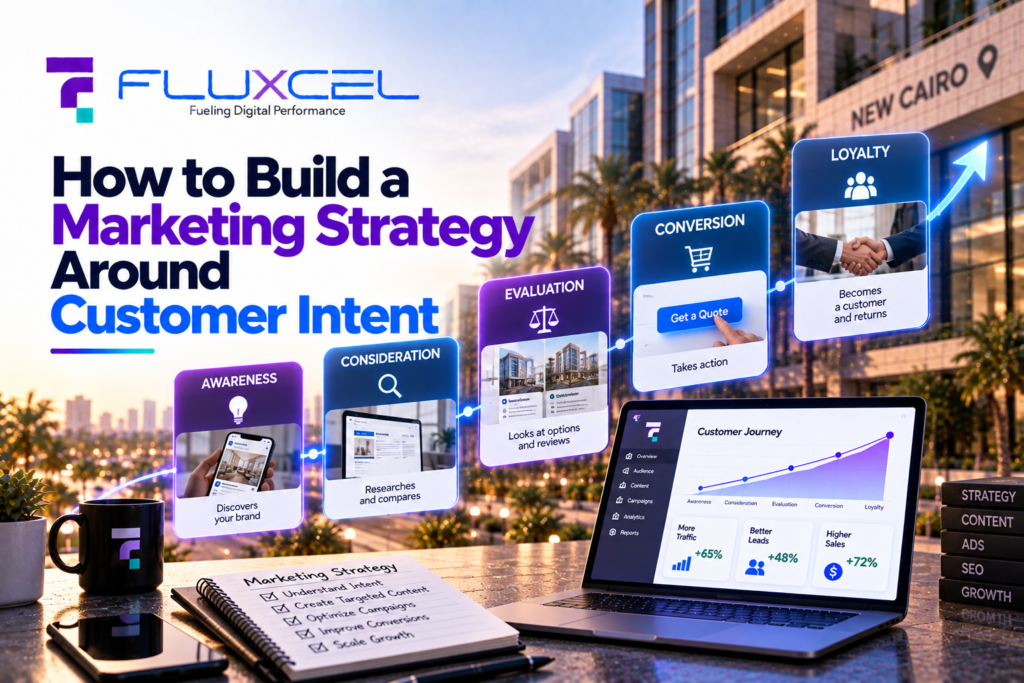
Most businesses know who they want to reach.
Fewer understand what those customers are trying to accomplish when they interact with the brand.
That difference matters.
A person casually watching a Reel is in a completely different mindset from someone searching Google for a specific service, comparing prices, reading reviews, or returning to a product page for the third time.
Yet many businesses market to all of them in exactly the same way.
The result is often wasted budget, irrelevant traffic, weak conversion rates, and campaigns that generate attention without enough business impact.
Customer intent helps solve this problem.
Instead of building your marketing only around demographics, platforms, or interests, you build it around what customers want at each stage of their decision-making process.
For a Digital marketing agency New Cairo businesses work with, understanding customer intent can make everything from SEO and content to paid advertising and landing pages more effective.
What Does Customer Intent Actually Mean?
Customer intent describes what someone is trying to do when they interact with your business or search for information online.
Two people can belong to exactly the same demographic group while having completely different intentions.
Imagine two potential customers interested in office space.
One searches:
“Benefits of moving a business to New Cairo.”
Another searches:
“Office for rent in New Cairo District 5.”
The first person appears to be researching.
The second appears much closer to taking commercial action.
Both matter.
But they should not receive the same marketing message.
The Four Main Types of Search Intent
Understanding search intent is particularly useful for SEO and Google Ads.
Most searches can broadly be grouped into four categories.
Informational Intent
The person wants to learn something.
Examples might include:
- How does SEO work?
- What is performance marketing?
- How much should a company spend on digital advertising?
- How can I generate more leads?
These searches may not produce immediate sales, but they give businesses an opportunity to introduce themselves early in the customer journey.
Useful blogs, videos, guides, and FAQs work particularly well here.
Navigational Intent
The person already knows where they want to go.
They might search for a specific company, website, product, or platform.
Branded search visibility becomes important because customers should be able to find your official digital properties easily.
Commercial Intent
The customer is considering a purchase but is still evaluating options.
Searches may involve terms such as:
- Best
- Reviews
- Comparison
- Prices
- Top companies
- Which is better?
This audience needs reassurance.
Case studies, testimonials, comparisons, service pages, and detailed product information can help move them toward a decision.
Transactional Intent
This is where customers are ready—or very close—to taking action.
They might search for:
- Buy
- Book
- Request a quote
- Near me
- For rent
- Order online
- Schedule an appointment
These searches can be particularly valuable because the customer is demonstrating strong intent.
Match Your Content to the Customer’s Stage
Not every piece of content should attempt to close a sale.
That can actually make your marketing less effective.
Imagine someone searching for basic information and immediately seeing aggressive “BUY NOW” messaging.
They may not be ready.
Instead, create content that helps customers move naturally toward the next stage.
Awareness Content
At the beginning of the journey, focus on education and discovery.
This might include:
- Educational Reels
- Beginner guides
- Industry insights
- Problem-focused posts
- Blog articles
- Short videos
The goal is to become useful before asking for a commitment.
Consideration Content
Once people understand the problem, they start evaluating solutions.
This is where content such as the following becomes valuable:
- Case studies
- Service comparisons
- Testimonials
- Detailed FAQs
- Product demonstrations
- Pricing explanations
Now your business is helping them decide.
Conversion Content
High-intent customers need fewer distractions and clearer actions.
Give them:
- Strong service pages
- Relevant offers
- Booking options
- Quote forms
- Product pages
- Clear CTAs
The closer someone is to purchasing, the easier the path to conversion should become.
Use SEO to Capture Intent, Not Just Traffic
SEO sometimes becomes a race to rank for keywords with the highest search volume.
But search volume alone does not determine business value.
A keyword attracting 10,000 searches might produce little commercial value.
Another keyword with 500 highly relevant searches might consistently generate qualified customers.
Think About What Happens After the Search
Before targeting a keyword, ask:
Why is someone searching for this?
What information do they expect?
How close are they to taking action?
Does our business genuinely solve what they are looking for?
This leads to an SEO strategy based on relevance rather than traffic alone.
A Digital marketing agency New Cairo businesses partner with should consider both keyword volume and the commercial meaning behind the search.
Build Google Ads Around Buying Intent
Google Ads gives businesses access to customers actively searching for products and services.
But not every keyword represents the same level of intent.
Suppose a marketing agency targets:
“What is digital marketing?”
That could attract students, researchers, job seekers, or business owners.
Compare it with:
“Digital marketing agency New Cairo.”
The second search provides much clearer commercial intent.
The person is not simply trying to understand digital marketing.
They may be actively looking for an agency.
That difference should influence keyword selection, bidding, ad messaging, and landing pages.
Social Media Has Intent Signals Too
Customer intent is not limited to Google searches.
People reveal intent through their behavior across social media and websites.
Someone who watches 90% of your product video may be more interested than someone who watches three seconds.
Someone who visits your pricing page may have stronger intent than someone who likes one Instagram post.
Someone who adds a product to their cart demonstrates stronger commercial intent again.
These behaviors can help businesses segment audiences.
Build Audiences Around Actions
You might separate:
- Social media engagers
- Video viewers
- Website visitors
- Service-page visitors
- Pricing-page visitors
- Product viewers
- Cart abandoners
- Previous customers
The message can then become more specific as intent increases.
Don’t Show Every Audience the Same Ad
This is one of the biggest advantages of intent-based marketing.
A cold audience may need to understand the problem.
A warm audience may need proof.
A high-intent audience may need a reason to act now.
For example:
Cold audience:
“Struggling to generate consistent qualified leads?”
Warm audience:
“See how a structured digital strategy can improve lead quality.”
High-intent audience:
“Ready to grow? Book a strategy consultation.”
The business is the same.
The customer journey is different.
Your Landing Page Should Reflect Intent
Imagine someone searches specifically for “social media management New Cairo.”
They click an advertisement.
Then they land on a generic agency homepage listing ten different services.
The visitor now needs to find the information themselves.
A better experience would take them directly to a social media management page.
High-Intent Landing Pages Should Be Focused
Include:
- A clear headline
- Relevant benefits
- Service details
- Proof
- FAQs
- A strong CTA
Remove unnecessary distractions.
The landing page should feel like the natural continuation of the customer’s search or advertisement.
Use Retargeting to Respond to Behavior
Retargeting becomes much stronger when campaigns reflect what people previously did.
Someone who read a blog might need additional educational content.
Someone who visited a service page could receive a testimonial.
Someone who visited pricing may respond to a consultation offer.
Someone who abandoned a cart may simply need a reminder.
Instead of thinking:
“How do we retarget website visitors?”
ask:
“What did this visitor do, and what would logically help them next?”
That small change creates much more relevant advertising.
Use First-Party Data to Understand Real Customers
Advertising platforms provide useful data, but your own business data can reveal even more.
Look at information from:
- CRM systems
- Website analytics
- Sales records
- Customer inquiries
- Email engagement
- Previous purchases
This can reveal patterns that are difficult to see from advertising metrics alone.
For example, you might discover that leads coming from one service page convert at twice the rate of leads from another.
Or customers who purchase one product may frequently return for a related product.
These insights can influence future campaigns.
Measure Intent Through Actions
Intent cannot always be measured perfectly, but customer actions provide useful signals.
A simple website visit represents some interest.
Visiting multiple service pages shows more.
Viewing pricing may indicate stronger commercial interest.
Submitting a form represents another step.
Making a purchase is the clearest signal.
You can think of the journey as:
View → Engage → Research → Compare → Inquire → Purchase
Tracking these actions gives businesses a clearer understanding of how people move toward conversion.
Customer Intent Can Reduce Wasted Ad Spend
One of the biggest advantages of intent-based marketing is efficiency.
Instead of spending equally across everyone who might theoretically be interested, businesses can invest more strategically.
High-intent audiences can receive conversion-focused campaigns.
Medium-intent audiences can receive proof and educational content.
Low-intent audiences can be introduced to the brand without immediately pushing for a sale.
This allows the message and budget to match the customer’s readiness.
Build Marketing Around What Customers Actually Want
Strong digital marketing does not force every person through exactly the same path.
It recognizes that customers have different questions, needs, concerns, and levels of readiness.
When businesses understand intent, SEO becomes more relevant.
Advertising becomes more targeted.
Content becomes more useful.
Landing pages become more focused.
Retargeting becomes more personalized.
And sales teams receive customers who are better prepared to have a conversation.
At Fluxcel Digital Marketing Agency, we build strategies around real customer journeys rather than treating every click, visitor, and lead the same way.