
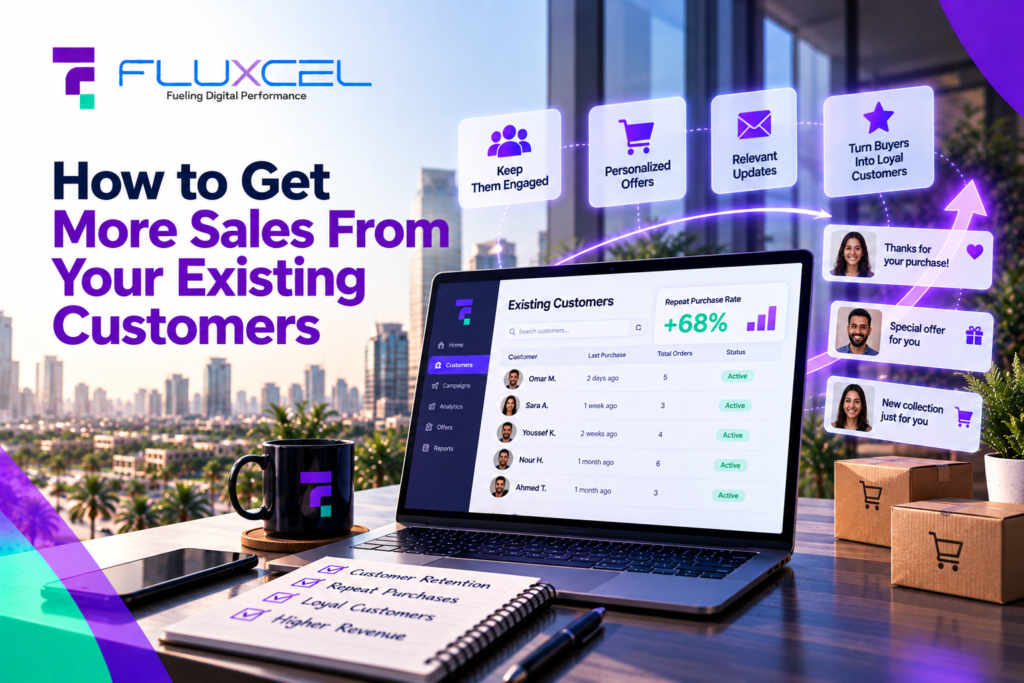
Most businesses spend a significant amount of time trying to attract new customers. They invest in Google Ads, launch social media campaigns, create promotional offers, and constantly search for new audiences.
But there’s another opportunity that often receives far less attention: the customers who have already purchased from them.
Think about it. Someone who has bought your product, visited your clinic, booked your service, or worked with your company already knows your business. They’ve experienced what you offer and have a reason to consider choosing you again.
Yet many businesses stop communicating with customers immediately after completing a sale.
For companies operating in New Cairo, this creates a missed opportunity to build stronger customer relationships and generate additional revenue.
Working with a Digital marketing agency New Cairo businesses can depend on helps companies develop customer retention strategies that encourage repeat purchases, strengthen loyalty, and increase customer lifetime value.
The goal isn’t simply to sell more products. It’s to give existing customers meaningful reasons to return.
Why Existing Customers Matter to Business Growth
Acquiring new customers is important, especially for businesses entering new markets or launching new products.
However, focusing exclusively on customer acquisition can make growth unnecessarily expensive.
Existing customers may already understand your products, trust your business, and feel comfortable purchasing again.
That familiarity can reduce some of the barriers associated with first-time purchases.
The Business Value of Customer Retention
A strong customer retention strategy can help businesses:
Generate additional revenue from previous buyers.
Encourage repeat purchases and service bookings.
Increase customer lifetime value.
Strengthen customer relationships.
Create opportunities for referrals.
Reduce dependence on constantly acquiring new customers.
For example, a skincare business might spend heavily attracting first-time customers.
If those customers enjoy the products but never hear from the brand again, the company misses opportunities to introduce relevant complementary products or replenishment options.
Maintaining appropriate communication can help turn a single transaction into an ongoing customer relationship.
Understand Your Customer Lifetime Value
Customer lifetime value, commonly called CLV or LTV, estimates how much value a customer contributes throughout their relationship with a business.
It’s an important concept because not every customer generates the same amount of revenue.
Some customers purchase once, while others return regularly.
Calculate Customer Lifetime Value
A simple revenue-based estimate is:
Imagine an online store where a typical customer:
Spends EGP 1,000 per order.
Makes four purchases annually.
Remains a customer for three years.
Illustrative customer lifetime revenue
EGP 12,000
EGP 1,000 × 4 purchases × 3 years
This estimates revenue, not profit. A profitability-based CLV should account for margins, retention costs, and other relevant expenses.Understanding customer lifetime value helps businesses make better decisions about acquisition budgets, retention campaigns, and customer service investments.
A customer who returns consistently may contribute more long-term value than several one-time buyers.
Segment Your Customers Instead of Sending Everyone the Same Message
One of the biggest mistakes in customer retention marketing is treating every previous customer identically.
A customer who purchased yesterday has different needs from someone who hasn’t ordered in six months.
Similarly, a customer who regularly purchases premium products may respond differently from someone who only shops during promotional periods.
Create Useful Customer Segments
Businesses can organize customers based on relevant behaviors, including:
First-time customers: People who recently completed their first purchase and may benefit from onboarding information.
Repeat customers: Buyers who have purchased multiple times and may be interested in relevant recommendations.
High-value customers: Customers who contribute significant value and may appreciate more personalized service.
Inactive customers: Previous buyers who haven’t interacted with the business for an extended period.
Category-specific customers: People who regularly purchase certain products or services.
Segmentation allows businesses to create more relevant communications instead of sending generic promotional messages to everyone.
A professional Digital marketing agency New Cairo businesses work with should use customer insights to develop campaigns based on real purchasing behavior rather than assumptions.
Use Email Marketing to Encourage Repeat Purchases
Email marketing remains a useful channel for maintaining customer relationships.
Unlike advertising platforms where businesses compete for attention, email allows brands to communicate directly with subscribers who have agreed to receive their messages.
However, successful email marketing involves more than sending discount announcements.
Create Helpful Email Campaigns
Consider developing several types of communication.
Welcome emails
Introduce new customers to your brand, explain what they can expect, and provide useful information about their purchase.
Product education
Share instructions, care tips, or recommendations that help customers get more value from products they’ve already purchased.
Relevant recommendations
Introduce complementary products or services based on customer interests and purchasing history.
Replenishment reminders
For products purchased regularly, send timely reminders when customers may need to reorder.
Customer appreciation
Recognize loyal customers with appropriate benefits, early access, or personalized communication.
The key is maintaining relevance.
Sending too many emails can create frustration and increase unsubscribe rates.
Businesses should monitor engagement and respect customer communication preferences.
Use WhatsApp Marketing Carefully and Effectively
WhatsApp can be particularly useful for businesses in Egypt because many customers already use it for everyday communication.
However, businesses should avoid treating WhatsApp as an unlimited promotional broadcasting channel.
Messages need to be relevant, timely, and sent with appropriate customer permission.
Build Better WhatsApp Customer Journeys
A clothing brand in New Cairo, for example, could use WhatsApp to communicate with customers who have opted in to receive updates.
Messages might include:
New collection announcements.
Relevant product availability updates.
Order and delivery information.
Personalized recommendations when appropriate.
Customer service follow-ups.
Businesses using the WhatsApp Business Platform should follow Meta’s messaging policies, including applicable opt-in and template requirements.
A useful message should feel like helpful communication, not unwanted advertising.
When managed responsibly, WhatsApp can support customer convenience and strengthen relationships.
Create Loyalty Programs That Offer Real Value
Loyalty programs can encourage repeat business by rewarding customers for maintaining a relationship with a brand.
However, not every business needs a complicated points system.
Sometimes, simple and meaningful benefits are more effective.
Choose Rewards That Fit Your Business
A coffee shop might offer a complimentary drink after a certain number of purchases.
A beauty brand could provide early access to new collections.
An e-commerce business might offer relevant benefits to returning customers.
A professional services company could provide additional support or exclusive educational resources to long-term clients.
The important question is whether customers genuinely value the reward.
A loyalty program should also make financial sense for the business.
Offering excessive discounts can increase order volume while reducing profitability.
The best programs balance customer appreciation with sustainable margins.
Use Personalized Recommendations to Increase Order Value
Customers don’t always know which additional products or services might be useful to them.
Relevant recommendations can improve the shopping experience while creating opportunities for additional revenue.
Understand Cross-Selling and Upselling
Cross-selling involves recommending complementary products.
For example, a customer purchasing a laptop might also need a protective case or compatible accessories.
Upselling involves introducing a higher-value option when it genuinely offers benefits relevant to the customer’s needs.
For example, a business might explain the differences between a standard service package and a more comprehensive alternative.
Both techniques should prioritize customer relevance.
Recommending unnecessary products or aggressively pushing expensive upgrades can damage trust.
The objective is to help customers make better purchasing decisions.
Build a Post-Purchase Experience Customers Appreciate
Customer retention begins immediately after a purchase.
A customer who experiences unclear delivery updates, delayed support, or unresolved problems may hesitate to buy again.
On the other hand, a smooth post-purchase experience can create confidence.
Improve Communication After the Sale
Businesses should consider:
Sending clear order or booking confirmations.
Providing accurate delivery or service updates.
Making customer support easy to access.
Offering helpful product or service guidance.
Requesting genuine feedback at an appropriate time.
For service businesses, follow-up communication can be particularly valuable.
A marketing consultancy might schedule a performance review with a client.
A maintenance company could provide service reminders based on recommended intervals.
The right follow-up depends on the industry and the customer’s actual needs.
Bring Back Inactive Customers With Re-Engagement Campaigns
Not every customer who stops purchasing is dissatisfied.
Some simply forget about the business, no longer need the product, or become distracted by alternatives.
Re-engagement campaigns can help reconnect with customers who haven’t interacted with the brand recently.
Develop a Win-Back Strategy
Start by identifying customers who haven’t purchased within a meaningful period.
The definition of inactivity should reflect the typical purchasing cycle.
For example, three months without a purchase might be significant for a frequently purchased household product but completely normal for furniture.
Once you’ve identified an appropriate audience, consider communicating:
New products or services relevant to previous purchases.
Improvements to the customer experience.
Useful information related to customer interests.
Appropriate return-customer offers.
A simple invitation to share feedback.
Avoid assuming that every inactive customer needs a discount.
Sometimes, reminding customers of the value your business provides is enough to encourage renewed interest.
Measure Customer Retention Performance
Retention marketing should be measured with the same discipline as customer acquisition.
Businesses need to understand whether their efforts are improving customer relationships and generating profitable revenue.
Important Customer Retention Metrics
Metric | What it tells you |
|---|---|
Repeat purchase rate | Percentage of customers who buy more than once |
Customer retention rate | Percentage of customers retained over a period |
Purchase frequency | How often customers return |
Customer lifetime value | Estimated long-term customer value |
Churn rate | Percentage of customers lost |
Repeat customer revenue | Revenue generated by returning buyers |
Businesses should analyze these metrics over meaningful periods.
A short-term increase in repeat purchases may be encouraging, but sustainable retention requires consistent performance.
It’s also important to distinguish between revenue growth and profitability.
A campaign generating repeat purchases through heavy discounts may not deliver the same financial value as one encouraging full-price purchases.
Make Customer Retention Part of Your Marketing Strategy
Customer retention shouldn’t be treated as an occasional promotional campaign.
It should be part of the overall marketing strategy.
Acquisition campaigns introduce new customers to the business.
Customer experience builds confidence.
Retention marketing maintains the relationship and creates opportunities for future purchases.
When these activities work together, businesses can develop a more sustainable growth model.
For companies operating in New Cairo, this approach can be especially valuable in competitive industries where acquiring new customers requires ongoing advertising investment.
Turn One-Time Buyers Into Long-Term Customers
Business growth doesn’t always require reaching more people.
Sometimes, the greatest opportunity is building stronger relationships with customers who already know your brand.
By improving post-purchase communication, segmenting audiences, developing relevant loyalty programs, and measuring customer retention, businesses can create more value from their existing customer base.
At Fluxcel, we believe successful digital marketing should support the entire customer relationship, not just the first conversion.
Our approach connects digital strategy, customer insights, performance marketing, and retention-focused communication to help businesses pursue sustainable growth.
As a Digital marketing agency New Cairo businesses can partner with, Fluxcel helps brands develop marketing strategies that support customer acquisition, repeat business, and long-term value.
Ready to generate more revenue from the customers you’ve already earned?
Connect with Fluxcel Digital Marketing Agency and discover how a customer retention strategy can support your business growth.