
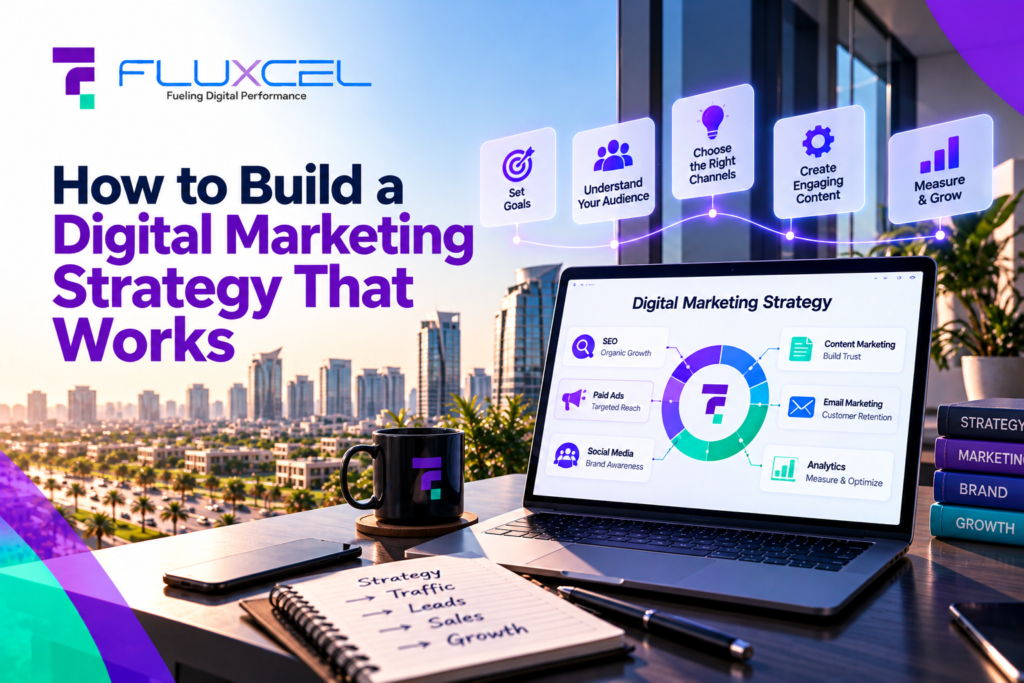
Every business wants to grow online. More customers, stronger sales, better brand visibility, and a consistent return on marketing investment are goals almost every business owner shares.
But achieving these results requires more than running advertisements or publishing social media posts.
Many businesses invest in digital marketing without having a clear strategy. They launch campaigns because competitors are advertising, post content because their social media pages need activity, and increase budgets whenever results start declining.
The problem is that these activities often operate independently, without contributing to a larger business objective.
For companies operating in New Cairo, where competition continues across industries such as real estate, healthcare, retail, and professional services, having a structured digital marketing strategy can make a significant difference.
Working with a Digital marketing agency New Cairo businesses can depend on helps connect marketing activities with clear goals, customer behavior, and measurable business outcomes.
A successful strategy doesn’t necessarily require the largest budget. It requires the right priorities, consistent execution, and the ability to adapt based on real performance.
What Is a Digital Marketing Strategy?
A digital marketing strategy is a structured plan that explains how a business will use online channels to achieve specific objectives.
It identifies the audience a company wants to reach, the messages it needs to communicate, the platforms it should prioritize, and the results it expects to achieve.
Unlike individual marketing campaigns, a strategy considers the bigger picture.
For example, running Facebook advertisements is a marketing activity.
Deciding how Facebook advertisements will support customer acquisition, connect with website content, and contribute to revenue growth is part of a marketing strategy.
Why Businesses Need a Clear Strategy
Without a defined plan, marketing efforts can become inconsistent and expensive.
A strong strategy helps businesses:
Establish clear marketing priorities.
Reach audiences more effectively.
Allocate budgets based on business objectives.
Maintain consistent communication across channels.
Measure performance using meaningful metrics.
Make better decisions about future investments.
Most importantly, it gives every marketing activity a purpose.
Start With Clear Business Objectives
Before selecting advertising platforms or developing content, businesses need to determine what they actually want to achieve.
Different objectives require different marketing approaches.
A newly launched company might prioritize introducing its brand to potential customers.
An established e-commerce business may focus on increasing repeat purchases.
A professional services company might aim to generate more consultation requests.
Set SMART Marketing Goals
SMART goals are specific, measurable, achievable, relevant, and time-bound.
Instead of setting a general objective such as “increase sales,” a business could establish a more practical target.
For example:
“Increase monthly online sales by 20% within six months while maintaining a sustainable customer acquisition cost.”
This creates a measurable objective that marketing teams can work toward.
Other examples include:
Increasing qualified inquiries from target locations.
Improving revenue from existing customers.
Expanding into a new geographic market.
Increasing the percentage of revenue generated through online channels.
Clear objectives make it easier to evaluate whether a strategy is working.
Understand Your Market Before Launching Campaigns
A successful marketing strategy starts with research, not assumptions.
Businesses need to understand their market, competitors, and customer expectations before investing heavily in advertising.
This is particularly important in New Cairo, where companies may compete with both established brands and emerging businesses.
Analyze Your Competitors
Competitor research can reveal valuable opportunities.
Look at how other businesses position themselves online.
Examine their websites, content, advertising messages, and customer experiences.
Ask questions such as:
Which services do competitors emphasize?
What customer problems do they address?
How do they communicate their value?
Which digital channels appear important to their marketing?
What opportunities are they overlooking?
The objective isn’t to copy competitors.
It’s to understand the market and identify ways your business can offer something more relevant or distinctive.
Identify Market Opportunities
For example, a business might discover that competitors focus heavily on promotional offers but provide limited educational content.
This could create an opportunity to build customer confidence through useful guides, videos, and detailed service explanations.
Market research helps businesses make strategic decisions based on evidence rather than following trends.
Choose the Right Digital Marketing Channels
One common mistake is assuming that businesses need to be active on every available platform.
In reality, spreading resources across too many channels can reduce efficiency.
The most effective platforms depend on customer behavior, business objectives, and available resources.
Google Ads for High-Intent Searches
Google Search Ads can help businesses reach potential customers who are actively looking for specific products or services.
For example, someone searching for accounting services in New Cairo may already be considering contacting a provider.
Search advertising can help connect businesses with this existing demand.
Meta Ads for Discovery and Engagement
Facebook and Instagram advertising can support brand awareness, product discovery, and customer acquisition.
Visual content, short videos, and carefully developed advertising messages can help businesses introduce their offerings to relevant audiences.
SEO for Sustainable Organic Visibility
Search engine optimization helps websites become more discoverable in relevant organic search results.
Although SEO typically requires ongoing investment and time, it can support long-term visibility and reduce dependence on paid traffic.
Email Marketing for Customer Relationships
Email marketing allows businesses to communicate with customers who have chosen to receive their messages.
It can support customer education, product updates, retention campaigns, and relevant promotional offers.
A professional Digital marketing agency New Cairo businesses partner with should recommend marketing channels based on their contribution to business objectives, not simply because they are popular.
Build a Customer Journey Across Multiple Channels
Customers rarely follow a perfectly predictable purchasing process.
Someone might discover a brand through Instagram, research its services on Google, visit its website, and return later after receiving a recommendation.
A successful digital marketing strategy considers these interactions as parts of one customer journey.
Connect Awareness, Consideration, and Purchase
At the awareness stage, marketing introduces the business and helps customers recognize a relevant need.
During consideration, customers compare available solutions and evaluate which business best meets their expectations.
At the purchase stage, they look for clear information and a convenient way to take action.
After purchasing, ongoing communication can support satisfaction, repeat business, and referrals.
Businesses should create relevant marketing experiences for each stage rather than expecting every advertisement to generate an immediate sale.
Develop a Content Strategy With a Clear Purpose
Content marketing should support business objectives rather than simply fill a publishing calendar.
Posting every day doesn’t automatically improve marketing performance.
The value of content depends on its relevance, quality, and ability to connect with the intended audience.
Create Content Around Customer Needs
A useful content strategy may include:
Educational articles that explain important industry topics.
Videos demonstrating products or services.
Case studies showing how businesses solve customer problems.
Frequently asked questions addressing purchasing concerns.
Company updates that communicate expertise and developments.
Content should also reflect the platforms where it appears.
A detailed blog article may work well on a website, while a short video could communicate the same idea more effectively on Instagram.
The underlying message should remain consistent, even when the format changes.
Allocate Your Marketing Budget Strategically
Marketing budgets should reflect business priorities and expected returns.
Allocating money equally across every platform may appear balanced, but it doesn’t necessarily produce the best results.
Instead, businesses should consider which channels contribute most effectively to their objectives.
Use a Flexible Budget Framework
A practical approach is to divide marketing investment into three categories.
Example marketing budget allocation
Illustrative allocation only; actual budgets should reflect business goals and performance.
Proven channels: Invest primarily in activities that have demonstrated reliable performance.
Growth opportunities: Allocate resources to channels or campaigns with potential for expansion.
Testing: Reserve a smaller portion for experimenting with new audiences, creatives, or platforms.
This is an illustrative framework rather than a universal formula.
A new business with limited historical data may need a different allocation from an established company with several years of campaign performance.
The important principle is maintaining flexibility while avoiding unnecessary spending.
Connect Marketing With Sales and Customer Service
Marketing doesn’t operate in isolation.
Even the strongest campaigns can struggle if the sales process is inefficient or customer expectations aren’t met.
For service businesses, this connection is particularly important.
Imagine a company generating dozens of qualified inquiries through Google Ads.
If the sales team takes several days to respond, some potential customers may choose competitors.
The marketing campaign may appear unsuccessful even though it attracted relevant prospects.
Improve Collaboration Between Teams
Businesses should establish processes for:
Sharing information about lead quality.
Tracking inquiries through the sales process.
Identifying common customer objections.
Monitoring response times.
Connecting marketing reports with actual sales results.
This collaboration helps businesses identify whether performance challenges originate from advertising, customer communication, or the sales process.
Measure Performance and Make Data-Driven Decisions
A digital marketing strategy should never remain unchanged simply because it was approved at the beginning of the year.
Customer behavior, market conditions, and business priorities can change.
Regular performance analysis helps businesses adapt.
Focus on Meaningful Marketing KPIs
Important metrics may include:
Customer acquisition cost (CAC): The cost of acquiring a new customer.
Return on ad spend (ROAS): Revenue attributed to advertising relative to advertising spending.
Conversion rate: The percentage of users completing a desired action.
Qualified lead volume: The number of inquiries matching defined customer criteria.
Customer lifetime value (CLV): The estimated value of a customer relationship over time.
Revenue growth: Changes in sales over a defined period.
Not every metric will be equally relevant to every business.
An e-commerce company may prioritize purchases and revenue, while a B2B company may focus on qualified opportunities and closed deals.
The key is choosing metrics that reflect the original business objectives.
Avoid Common Digital Marketing Strategy Mistakes
Even businesses with experienced teams can struggle when their marketing activities lack coordination.
Several mistakes are worth avoiding.
Changing Direction Too Frequently
Making major campaign changes after one or two disappointing days can interrupt learning and make performance harder to evaluate.
Businesses should assess trends using sufficient data.
Following Every New Trend
New platforms and content formats can create opportunities, but not every trend deserves investment.
Evaluate whether it fits your audience and objectives before committing resources.
Ignoring Existing Customers
Acquiring new customers is important, but retaining satisfied customers can also contribute significantly to business growth.
A balanced strategy should consider both acquisition and retention.
Measuring Activity Instead of Results
Publishing more posts or increasing advertising impressions doesn’t automatically mean marketing is improving.
Focus on outcomes that contribute to business performance.
Build a Strategy That Can Grow With Your Business
The best digital marketing strategies aren’t necessarily the most complicated.
They’re the ones that connect clear business objectives with customer understanding, relevant marketing channels, and consistent performance measurement.
For businesses operating in New Cairo, having a structured approach can help reduce wasted effort, improve coordination, and create a stronger foundation for growth.
At Fluxcel, we believe successful marketing begins with understanding the business behind the campaigns.
Our approach connects digital strategy, paid advertising, SEO, content marketing, and performance analysis to support measurable business objectives.
As a Digital marketing agency New Cairo businesses can work with, Fluxcel focuses on developing practical strategies that help companies make informed marketing decisions and pursue sustainable growth.
Ready to stop guessing and start building a digital marketing strategy with clear direction?
Connect with Fluxcel Digital Marketing Agency and discover how a more structured approach can help your business grow.