
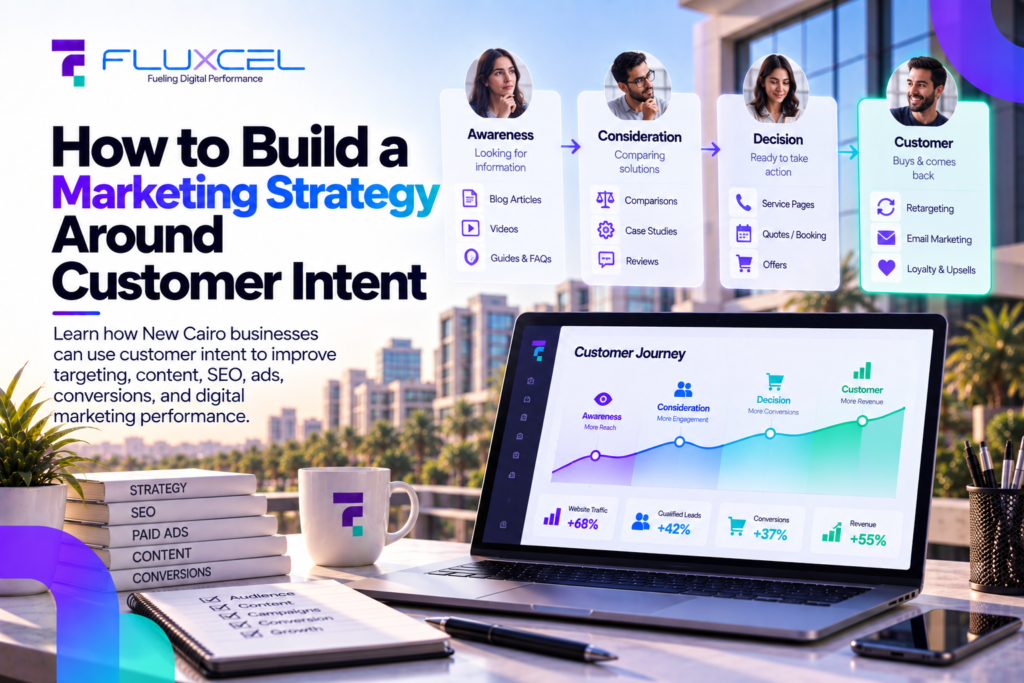
Not every person who interacts with your business online wants the same thing.
One person might be discovering your brand for the first time. Another may be comparing your services with three competitors. Someone else might already know exactly what they want and simply needs a reason to choose you.
Yet many businesses market to all three people in exactly the same way.
They show the same ads, send visitors to the same pages, publish the same type of content, and use the same calls-to-action.
That approach ignores one of the most important factors in digital marketing: customer intent.
Understanding why someone is searching, clicking, watching, or visiting your website can help you create marketing that is much more relevant to where they are in their decision-making process.
For a Digital marketing agency New Cairo businesses work with, customer intent should influence everything from SEO and paid advertising to content, landing pages, and retargeting.
What Is Customer Intent?
Customer intent describes what someone is trying to accomplish when they interact with your business or search online.
They might want to learn.
They might want to compare.
They might want to find a particular company.
Or they might be ready to purchase.
Understanding that difference helps businesses avoid pushing a sales message too early—or failing to make an offer when a customer is ready to act.
Customer intent can generally be grouped into several stages.
Informational Intent
The person is looking for knowledge or trying to understand a problem.
They may search questions such as:
- How does a particular service work?
- What are the benefits?
- How much should something cost?
- How can a specific problem be solved?
These users may not be ready to buy yet, but they can still become valuable future customers.
Commercial Intent
The person understands their need and is evaluating available solutions.
Their searches might include words such as:
- Best
- Top
- Reviews
- Comparison
- Services
- Companies
At this stage, customers are often comparing providers, prices, features, reputation, or quality.
Transactional Intent
These customers are closer to taking action.
They may search for a specific service in their location, request pricing, book an appointment, buy a product, or contact a business.
This is where clear conversion paths become especially important.
Stop Treating Every Customer Like They’re Ready to Buy
Imagine seeing an advertisement from a company you’ve never heard of.
The message immediately says:
BUY NOW.
You don’t know the company.
You don’t know whether the product is suitable.
You don’t know why you should trust them.
For some products, an immediate purchase may happen. For many businesses, however, customers need more information first.
Marketing becomes stronger when the message reflects the customer’s current level of awareness.
Someone at the beginning of their journey may need education.
Someone comparing providers may need proof.
Someone ready to purchase may need a strong offer and simple next step.
Use Search Behavior to Understand Intent
Search engines provide businesses with valuable clues about what customers want.
The words people type into Google often reveal where they are in their journey.
For example:
“What does a digital marketing agency do?”
This is primarily informational.
“Digital marketing agency services”
This suggests stronger commercial interest.
“Digital marketing agency New Cairo”
This has a clear local and commercial dimension and may indicate that the user is actively looking for an agency.
The pages targeting each search shouldn’t necessarily be identical.
An educational search may lead to a blog article.
A service-focused search should probably lead to a detailed service page.
A high-intent local search should make it easy for the customer to evaluate the business and contact the team.
Build SEO Around Search Intent
SEO isn’t simply about placing keywords on pages.
You need the right page for the right search.
If Google users are looking for an explanation, a highly promotional service page may not satisfy their intent.
If they’re ready to hire a company, a general educational article may not move them toward action efficiently.
Match Content Types With Intent
For informational searches, consider:
- Blog articles
- Guides
- FAQs
- Educational videos
- How-to content
For commercial searches:
- Service pages
- Comparison content
- Case studies
- Detailed solution pages
- Testimonials
For transactional searches:
- Product pages
- Booking pages
- Contact pages
- Quote forms
- Dedicated landing pages
This structure helps both search engines and customers understand the purpose of your website.
Use Paid Search Differently for High-Intent Customers
Google Ads gives businesses an opportunity to appear when people actively search for specific solutions.
But not every keyword deserves the same bid, message, or landing page.
Someone searching broadly for information may behave very differently from someone searching for a provider nearby.
A Digital marketing agency New Cairo strategy should examine which search terms demonstrate stronger commercial intent and which simply generate traffic.
That means reviewing:
- Actual search terms
- Conversion rates
- Cost per conversion
- Lead quality
- Negative keywords
- Landing page performance
The goal isn’t necessarily to generate the highest number of clicks.
It’s to capture valuable demand.
Create Social Content for Different Intent Levels
Customer intent also matters on social media, even though people aren’t always actively searching.
Someone who sees your Reel for the first time has a different relationship with your business than someone who has followed you for six months.
Your content strategy should reflect that.
For New Audiences
Create content that earns attention and introduces the problem.
Examples include:
- Educational tips
- Common mistakes
- Industry insights
- Short videos
- Useful explanations
For Interested Audiences
Provide deeper information that helps them evaluate your company.
This might include:
- Case studies
- Customer stories
- Behind-the-scenes content
- Service explanations
- FAQs
For High-Intent Audiences
Make the next step clear.
Use:
- Offers
- Product demonstrations
- Consultation invitations
- Booking CTAs
- Lead-generation campaigns
A healthy content strategy supports customers at several stages instead of repeatedly publishing direct sales messages.
Design Landing Pages Around Why Someone Clicked
A landing page should answer the question or need that motivated the click.
If someone clicks an advertisement about SEO services, they shouldn’t land on a generic page talking equally about social media, web design, email marketing, and ten other services.
Keep the journey focused.
The landing page should explain:
- The relevant problem.
- The service or solution.
- The main benefits.
- Why the business is credible.
- What the visitor should do next.
The closer the landing page matches customer intent, the less effort visitors need to understand whether the offer is relevant.
Use Retargeting Based on Behavior
Retargeting becomes much more powerful when it’s based on what customers actually did.
A person who visited your homepage for ten seconds shouldn’t necessarily receive the same advertisement as someone who repeatedly viewed a specific service page.
Behavior provides clues about intent.
For example:
Blog reader: Show additional educational content.
Service-page visitor: Show testimonials or a case study.
Pricing-page visitor: Reinforce the value of the offer.
Cart abandoner: Remind them about the product.
Previous customer: Introduce a complementary service or product.
This creates a more natural progression through the customer journey.
Make Your Calls-to-Action Match the Stage
“Buy Now” isn’t always the right CTA.
Neither is “Learn More.”
The right call-to-action depends on what the customer is ready to do.
Earlier in the journey, you might use:
- Explore Our Services
- Learn More
- Read the Guide
- See How It Works
Closer to conversion:
- Request a Quote
- Book a Consultation
- Schedule an Appointment
- Start Your Order
- Contact Our Team
Calls-to-action work better when they feel like a logical next step rather than a sudden jump.
Use Analytics to Identify Intent Signals
Customer behavior on your website can reveal useful information.
Someone who reads one article and leaves may simply be researching.
Someone who visits several service pages, checks testimonials, returns two days later, and opens your contact page is demonstrating stronger interest.
Look at behaviors such as:
- Pages viewed
- Returning visitors
- Time on important pages
- Product views
- Form starts
- Cart activity
- Downloads
- CTA clicks
These signals can help businesses build more useful audience segments and improve retargeting strategies.
Don’t Forget Intent After the Lead Is Generated
Intent continues to matter after someone submits an inquiry.
Not every lead is at the same stage.
One person may need a service immediately.
Another might be planning for three months from now.
A third could simply be researching prices.
Sales teams can use this information to prioritize follow-up.
High-intent leads may need immediate personal contact.
Earlier-stage leads might benefit from useful emails, case studies, or periodic follow-up until they’re ready.
This prevents businesses from treating every lead as either “won” or “lost” too quickly.
Customer Intent Makes Marketing More Relevant
Effective digital marketing isn’t about showing more messages to more people.
It’s about delivering the right message at the right stage of the customer journey.
Understanding intent can improve SEO, paid advertising, social content, landing pages, retargeting, calls-to-action, and lead management.
It can also help businesses spend marketing budgets more intelligently by separating casual attention from genuine buying signals.
For businesses searching for a Digital marketing agency New Cairo, customer intent should be central to the strategy. Instead of treating every click equally, marketing should understand what customers are trying to achieve and help them move naturally toward the next step.
At Fluxcel, we build digital strategies around real customer behavior—connecting search, content, advertising, websites, and data to create more relevant customer journeys.